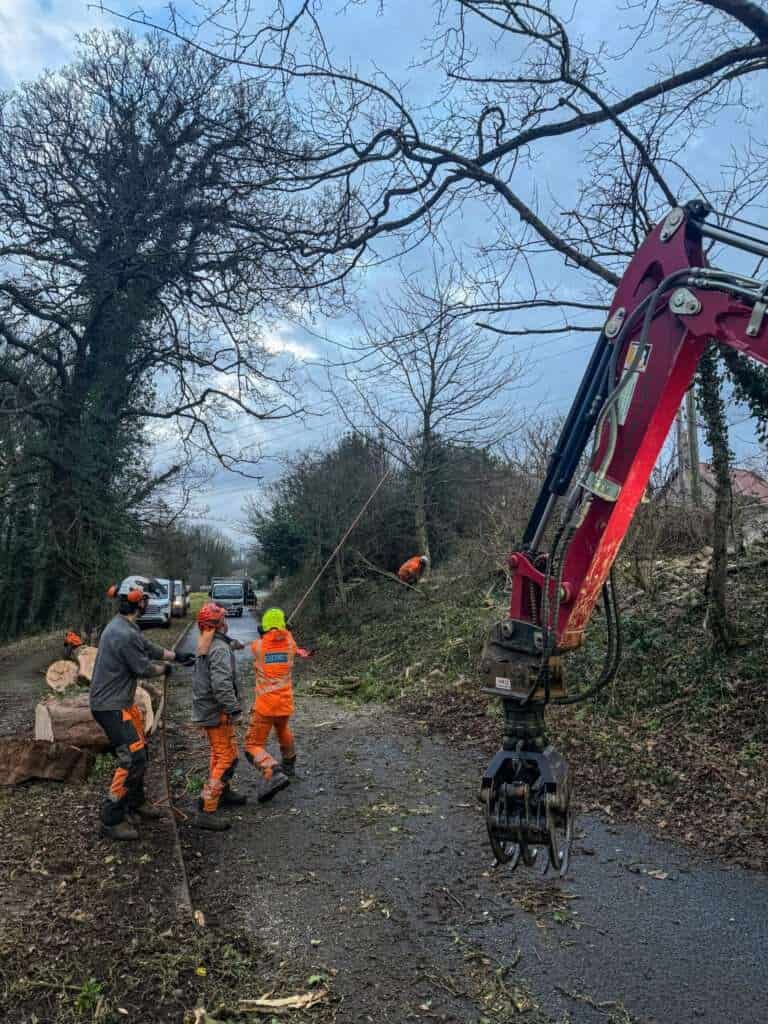
Few worries about trees are as common as the fear that roots will damage a house. Sometimes the concern is justified, but often the tree is blamed for something it did not cause, and removing it can even make matters worse. Understanding how roots grow, which trees are most likely to cause problems and what to do before you pick up the phone can save you money and stress.
How tree roots really grow
Most of a tree’s roots lie in the top metre of soil, because that is where oxygen and moisture are found. Roots spread widely, often to a distance equal to the tree’s height or more, but they do not dig down deeply looking for water. They mainly grow where conditions suit them, such as around leaky pipes, in loose backfill and under surfaces that trap moisture.
Roots do not typically break through solid, sound foundations. What they can do, in certain soils, is draw water out of the ground, which leads us to the subject of subsidence.
Subsidence and clay soils
Subsidence happens when the soil below a building shrinks and the foundations move. Shrinkable clay soils are the main culprit. Trees take up water in summer, the clay dries and contracts, and shallow foundations can drop. In winter, the clay re-wets and swells, which is called heave. Cracks that open and close with the seasons, especially diagonal cracks near doors and windows, may point to this process.
Parts of Cumbria have clay-rich soils, particularly on the coastal plain, so it is worth being aware of the risk. But many Cumbrian soils are sandy, gravelly or stony and do not shrink in the same way.
Which trees use the most water?
- High demand: oak, willow, poplar, elm and some eucalyptus.
- Moderate demand: ash, sycamore, beech, hornbeam and plane.
- Lower demand: birch, rowan, hawthorn, holly and most fruit trees.
The age of the building matters too. Older properties often have shallow foundations, while modern houses are built deeper and with allowances for nearby trees.
Drains and pipes
Roots do not seek out healthy pipes, but they will enter old or cracked joints where moisture escapes. Once inside, they thrive and can block the pipe. If you have repeated drain blockages, a CCTV survey will show the cause. Often the fix is repairing the pipe rather than removing the tree. Trees growing close to drains can sometimes be managed by root pruning under expert guidance.
Driveways, paths and walls
Surface roots can lift paving, tarmac and kerbs as they thicken. Walls can be pushed over by trunk growth. In these cases, options include:
- Re-laying the surface with a flexible or raised construction that bridges roots.
- Using a permeable material that allows air and water to reach the root zone.
- Lifting the crown to allow light, and reducing the tree’s size if appropriate.
- Removing the tree, as a last resort.
What to do if you suspect damage
- Record the cracks. Photograph them, measure their width and date your notes. Check whether they change through the seasons.
- Contact your insurer. If you suspect subsidence, tell your insurer before you do any work, because removing a tree without agreement can affect a claim.
- Get specialist advice. A structural engineer or building surveyor can confirm the cause, while an arborist can advise on the tree.
- Do not rush to fell. Removing a large, mature tree from clay soil can cause heave as the ground rehydrates.
Managing trees near buildings
If a tree is close to your home but not causing damage, regular management keeps it that way. Options include crown reduction, which reduces the tree’s water demand and the leverage of wind on the trunk, and routine pruning to keep growth in check. Our domestic tree surgery team can inspect your trees and recommend the least disruptive approach.
Planting new trees safely
Before planting, check how big the tree will grow and the soil type. As a rough guide, high-demand species should be planted at a distance of at least their mature height from buildings on clay. Smaller species can go closer. Our guide to native trees for Cumbrian gardens lists suitable options by size.
When removal is justified
If an expert confirms that a tree is the cause of damage, and other solutions will not work, removal may be the right course. We carry out this work carefully, often by dismantling the tree in sections, as explained on our tree felling page. Stump removal comes next, and roots left in the ground should be handled carefully, as discussed in our stump grinding guide.
Frequently asked questions
How close is too close?
There is no fixed distance. Species, soil and foundations all matter. A specialist assessment is the only reliable answer.
Can I cut roots myself?
Cutting large roots can destabilise a tree and harm its health. Get advice first.
Will pruning the crown stop subsidence?
Reduction lowers water demand, which can help, but it is not a guaranteed fix. It should be part of a wider plan.
Speak to an arborist
If a tree is worrying you, Arborscape can assess it and explain your options in plain English. Call 01946 444224 or book a visit.