Felling, pollarding and coppicing are three of the oldest ways of managing trees, and they are often confused. Each one has a different goal, suits different species and leaves a very different result. Choosing the wrong method can harm a tree, so it is worth understanding the differences before you book any work.
What is tree felling?
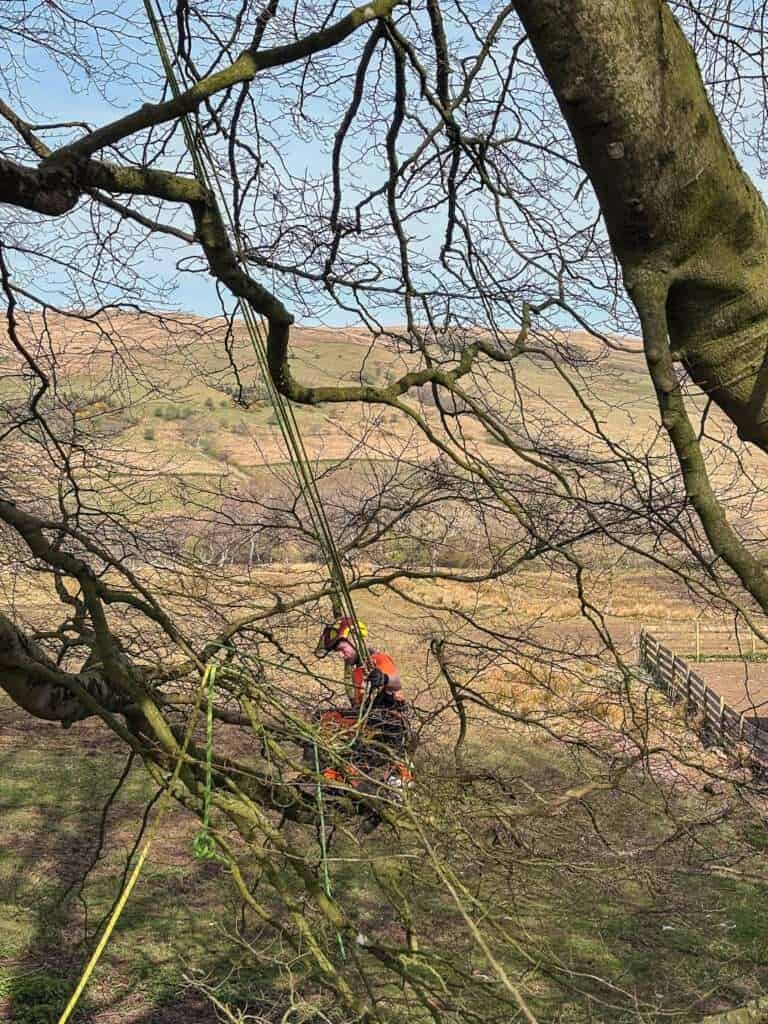
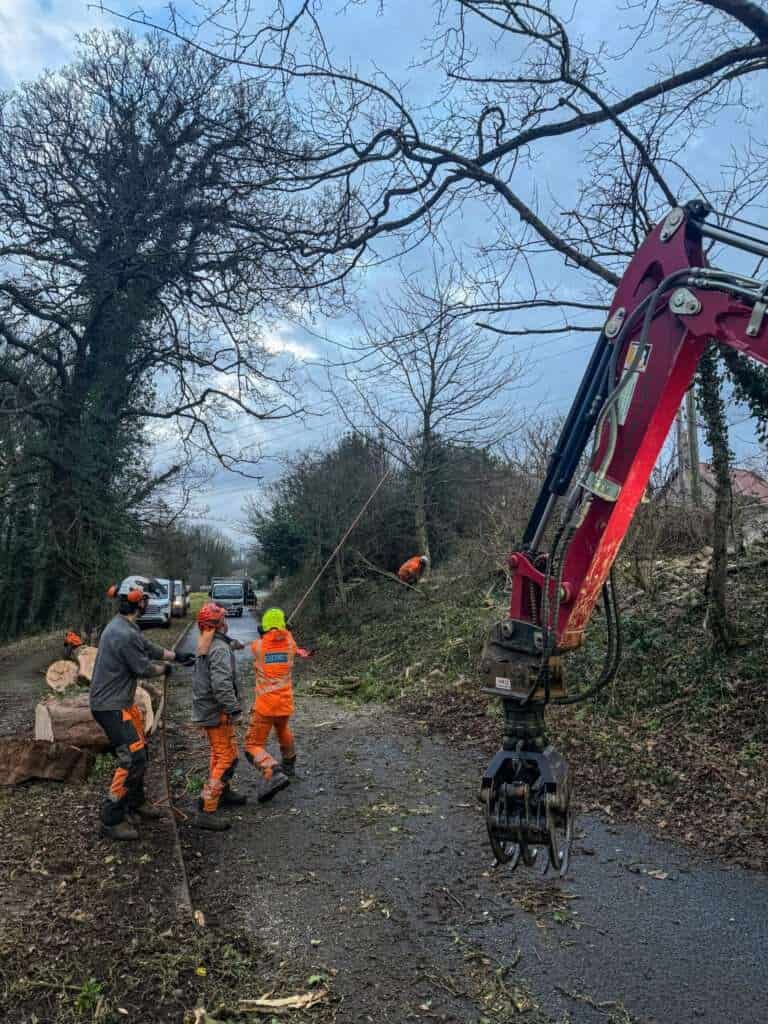
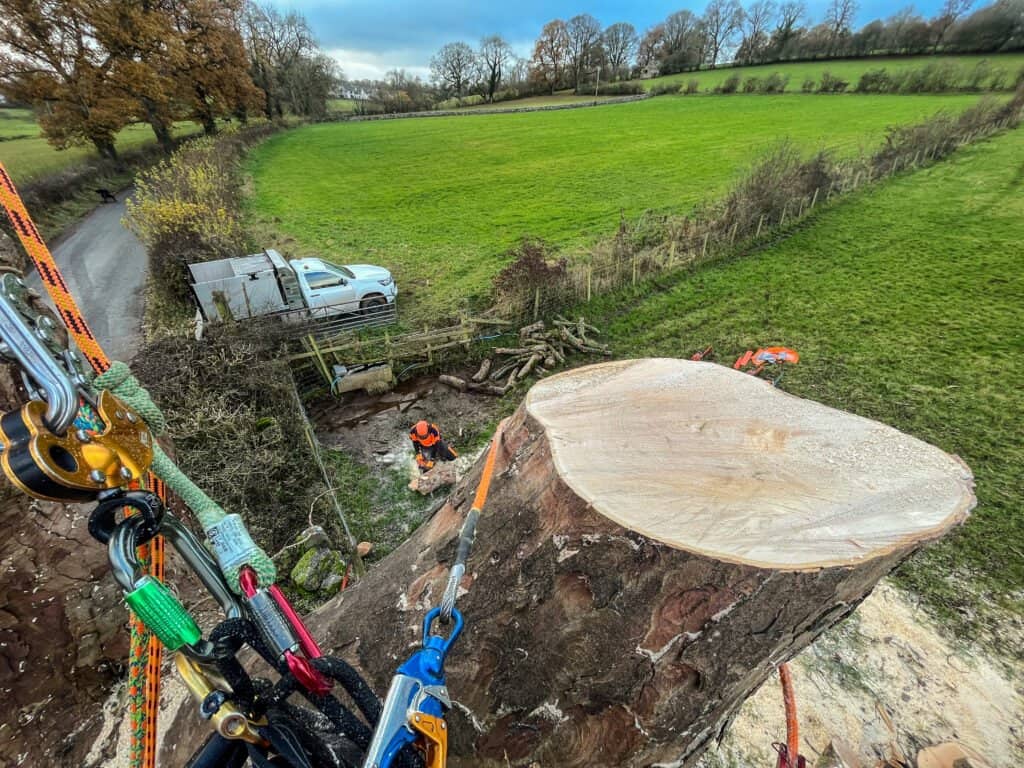
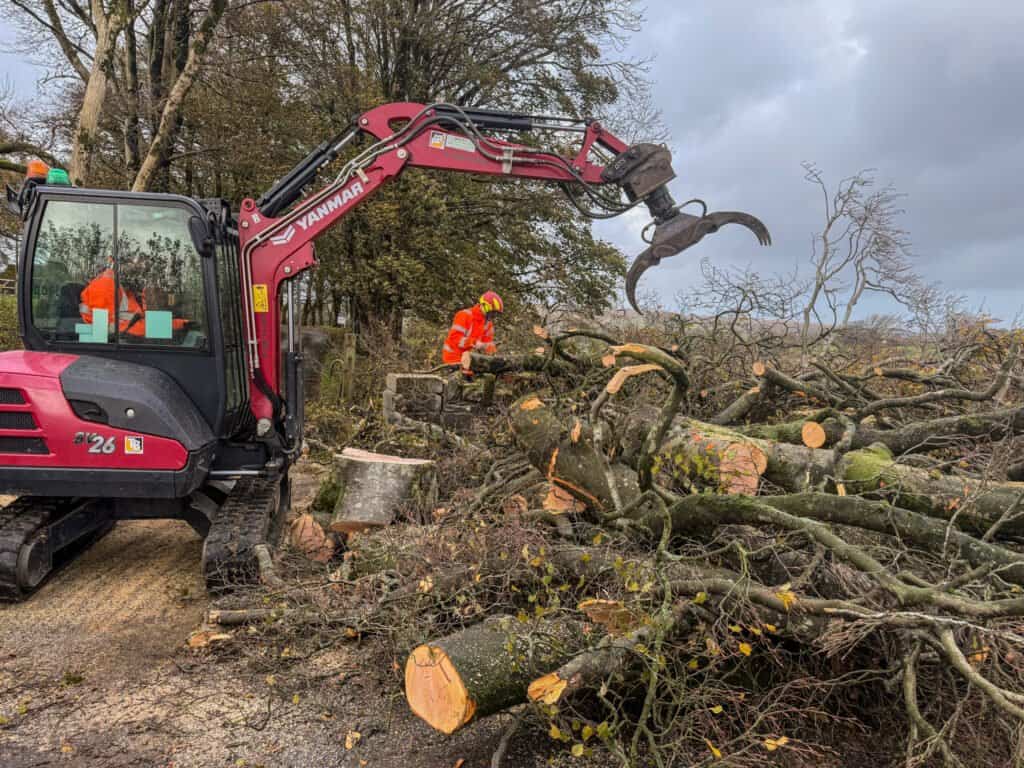
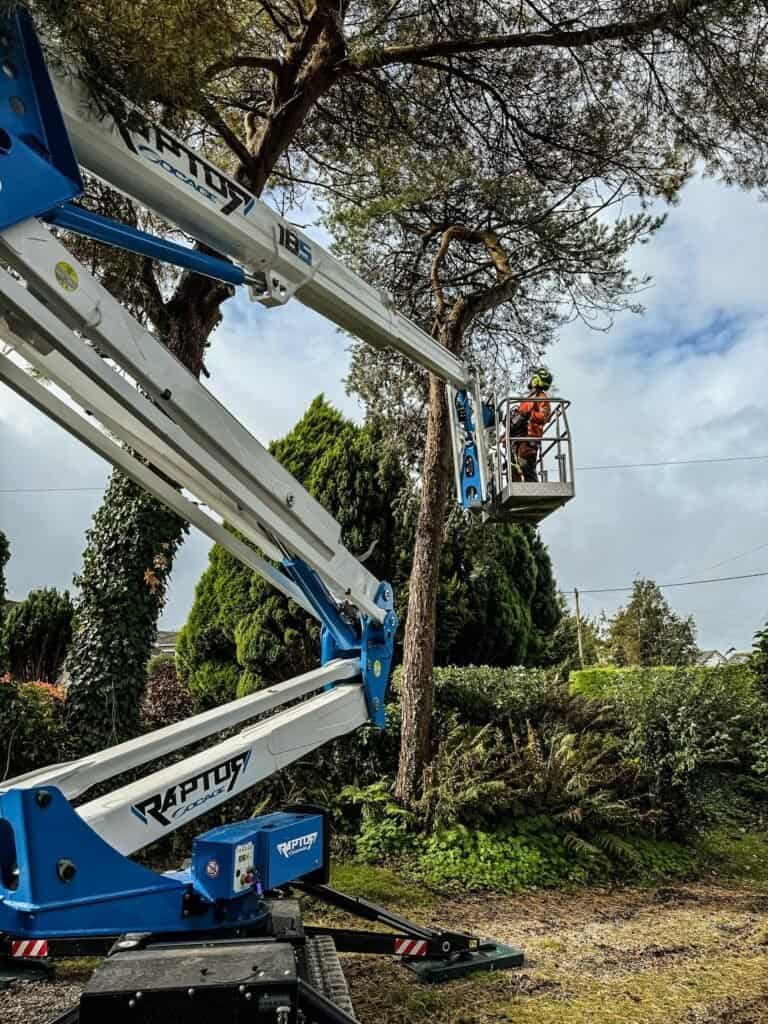
Felling means taking a whole tree down. It is the final option, used when a tree is dead, diseased, unsafe or in the way of building work. If there is space, the tree can be cut at the base and guided to the ground. If there is not, it is dismantled in sections, which is common around houses, roads and cables. We explain how this works on our tree felling page and in our guide to sectional dismantling.
When felling makes sense
- The tree is dead, or too diseased to recover.
- Structural faults make it unsafe and pruning cannot fix them.
- It is damaging a building, drain or boundary and the problem cannot be solved another way.
- It has to be removed for development, as agreed with the planning authority.
What is pollarding?
Pollarding is a form of pruning in which the main branches of a tree are cut back to the same point, leaving a framework of short limbs. The tree then sends up a flush of new shoots every year or every few years. Historically, pollards produced fodder for livestock and poles for fencing and fuel, while keeping the new growth out of reach of grazing animals.
Today pollarding is used to keep large trees at a manageable size in streets, car parks and gardens. It works well on willow, lime, plane, beech, hornbeam and oak. It is not suited to every species, and it has to be started while the tree is young enough to cope. Once a tree is pollarded, it needs regular repeat cuts, otherwise the new shoots grow heavy and may snap.
Pollarding is not the same as topping
Topping means chopping off the top of a tree at random heights. It leaves large wounds, causes decay and results in weak regrowth. Pollarding is planned, carried out at the right time of year and repeated. If someone offers to top your tree, ask about proper alternatives such as crown reduction.
What is coppicing?
Coppicing is the cutting of a tree or shrub close to the ground, so that it regrows as a cluster of stems. It is suited to species that regenerate readily from the stump, including hazel, willow, alder, ash, sweet chestnut and field maple. A coppiced woodland is managed in sections, or coups, which are cut on a rotation of several years. Each coup is therefore at a different stage of regrowth.
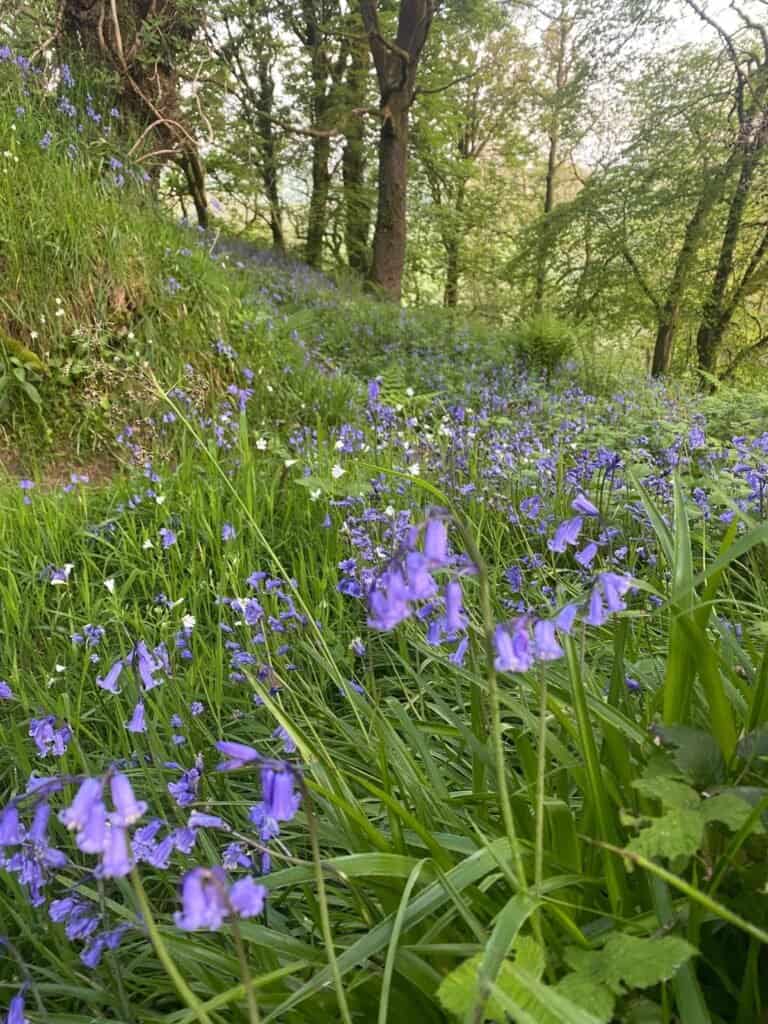
The result is a mosaic of light and shade, which benefits wildflowers, butterflies, dormice and nesting birds. Coppicing is a valuable tool in woodland management, and it can also be used in gardens to produce stakes, bean poles and garden structures.
Comparing the three
- Felling: permanent removal of the whole tree. Used when a tree is unsafe or cannot stay.
- Pollarding: cutting back to a framework at height. Keeps a tree small while retaining it.
- Coppicing: cutting at ground level. Produces multiple stems and a sustainable crop of timber.
Timing and wildlife
All three methods should avoid the bird nesting season, which runs roughly from March to August in the UK. Dormant-season work, between late autumn and early spring, is usually best for the tree and for wildlife. Bats and other protected species may also use trees, so a check before work starts is part of good practice. If you are unsure about timing, our team can advise.
Do you need permission?
Trees covered by a tree preservation order, or standing in a conservation area, usually need approval from the local authority before they are cut or felled. Larger quantities of felled timber may also need a licence. Always check before work begins. Our tree inspection and planning team can look into this for you.
What happens to the timber and brash?
Nothing needs to go to waste. Brash can be chipped on site to produce woodchip, which makes an excellent mulch for beds and paths. Read more on our woodchip and mulch page. Larger logs can be cut for firewood, left as habitat piles or removed.
Frequently asked questions
Can any tree be pollarded?
No. Species that regrow vigorously, such as willow, lime and plane, cope best. Conifers generally do not respond well.
Will a coppiced tree die?
Not if it is a suitable species. Coppice stools can live for hundreds of years.
Is pollarding cheaper than felling?
It can be cheaper in the short term, but it needs repeating. Compare costs in our guide to how much a tree surgeon costs.
Get advice from qualified arborists
Not sure which approach suits your tree? Arborscape can visit, assess the tree and recommend the least invasive option that meets your needs. Call 01946 444224 or request a free quote.