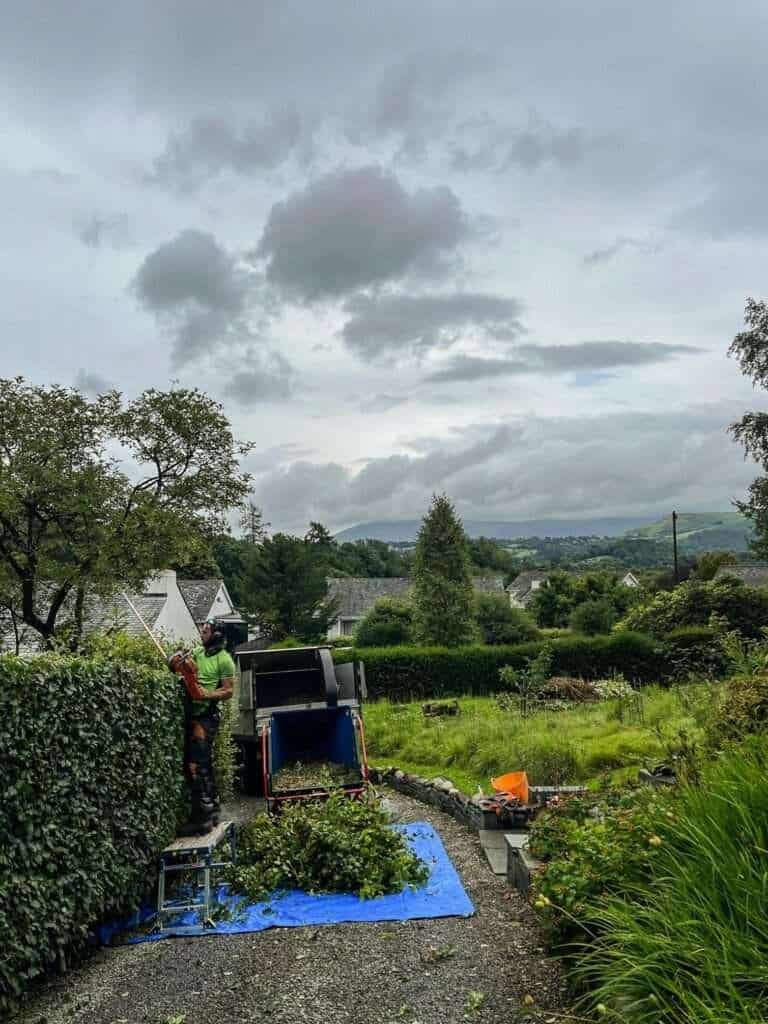
Hedges grow quickly, and a few years of neglect can turn a tidy boundary into a tall, bare-bottomed wall that blocks light and takes over the garden. The good news is that many hedges can be brought back with the right approach. The bad news is that some cannot, and cutting the wrong hedge too hard can kill it. This guide explains how to decide, when to cut and how to do it safely.
Step 1: Identify your hedge
The most important question is what the hedge is made of, because species differ enormously in how they respond to hard pruning.
Species that regrow well from old wood
- Hawthorn, blackthorn, hazel, field maple and hornbeam.
- Beech, privet, holly and yew.
- Laurel, which recovers strongly from hard cutting.
Species that rarely regrow from bare wood
- Most conifers, including Leylandii, Thuja and cypress. If you cut into brown, leafless wood, they usually do not sprout.
If your hedge is a conifer, you may need to keep it within its current green growth, or replace it. Our hedge cutting service can advise on options.
Step 2: Check the calendar
Birds nest in hedges from roughly March to August, and it is an offence to disturb an active nest. For this reason, hard cutting is best done between late autumn and late winter, from November to February. Check for nests before any work, even outside the main season. Our guide to the best times of year to cut hedges gives a full month-by-month view.
Step 3: Choose how hard to cut
Light reduction
If the hedge is only a little too big, trim it back by 10 to 15 cm each side and reduce the height gradually over two or three seasons.
Phased renovation
For a thick, overgrown hedge of a tolerant species, spread the work over three years. In year one, cut the top and one side. In year two, cut the other side. In year three, tidy and feed. This keeps part of the foliage intact, so the plant keeps photosynthesising and the hedge is never left bare.
Hard coppicing
Some native hedges, such as hawthorn and hazel, can be cut to near ground level. They send up many new shoots and form a dense, healthy base. It looks drastic, but it is often the best way to restore a gappy hedge. Hedge laying, the traditional craft of cutting and bending stems, is another option for field boundaries.
Step 4: Cut safely
- Use sharp, clean tools. Loppers and secateurs for stems up to a few centimetres; a pruning saw or chainsaw for thick stems.
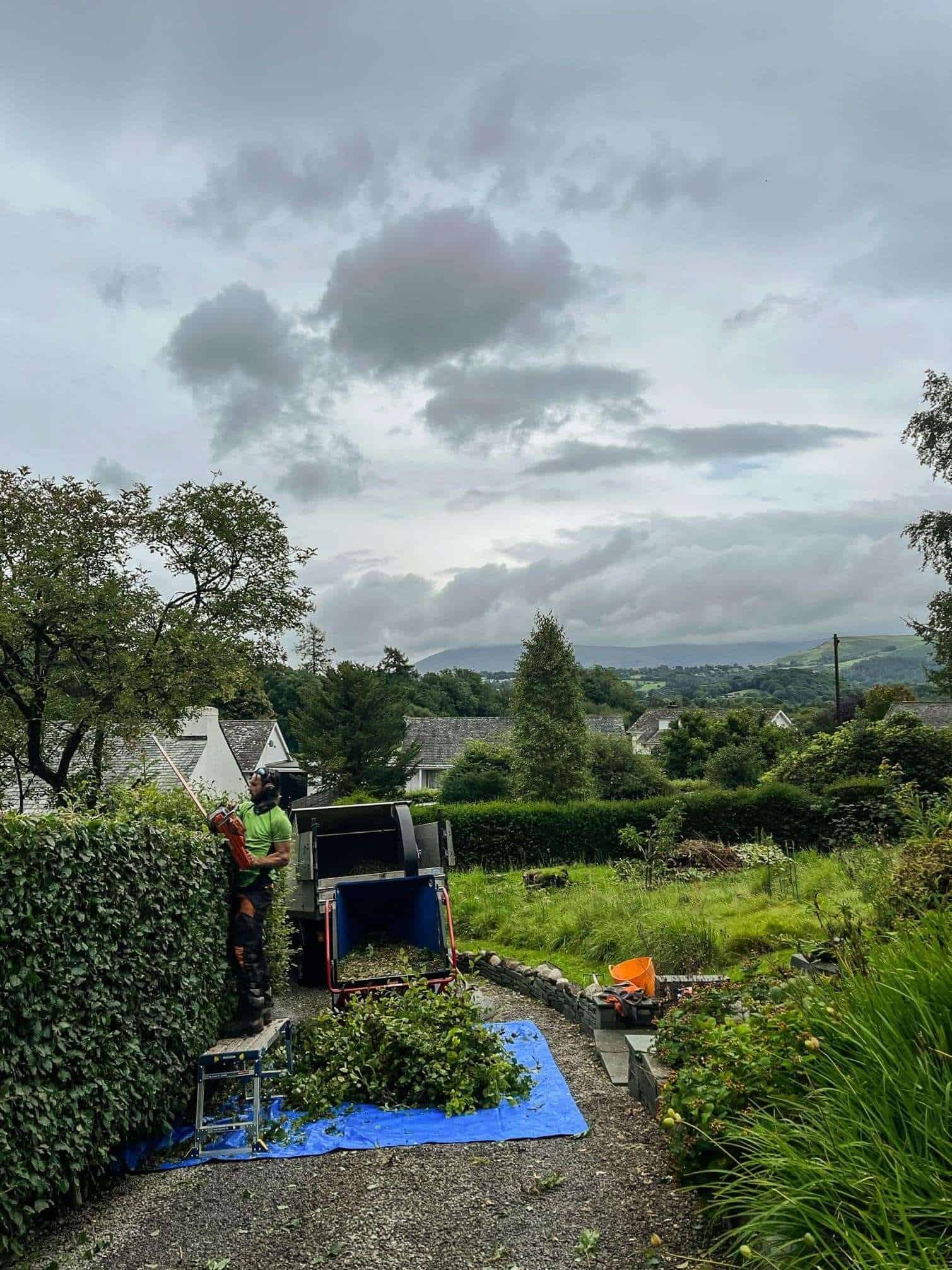
- Work from a stable base. Hedge trimmers on ladders are a major cause of accidents, so use a platform or leave tall hedges to a professional.
- Wear eye protection, gloves and, for power tools, ear defenders and chainsaw trousers where relevant.
- Make clean cuts at a slight angle, just above a bud or side shoot.
- Cut the hedge slightly wider at the base than the top, so light reaches the lower branches.
Step 5: Feed and water afterwards
After a hard cut, the hedge needs energy to regrow. Apply a general-purpose slow-release fertiliser in spring, and mulch the base with a layer of chip to keep the soil moist. In dry spells, water thoroughly. Our article on woodchip mulch explains how to apply it, and you can find supplies on our woodchip and mulch page.
What to do with the cuttings
A big hedge reduction produces a lot of material. Chip it, compost it, or leave a log pile at the back of the garden as a habitat for hedgehogs and insects. Burning garden waste is often restricted and upsets neighbours. If the volume is more than you can handle, we can remove it for you, or hire out a machine, see our wood chipper hire.
Common mistakes
- Cutting a conifer into brown wood.
- Cutting during nesting season.
- Making the hedge flat-topped and wider at the top, which shades the base.
- Leaving ivy and brambles to smother the hedge.
- Not feeding after a hard cut.
High hedges and neighbours
A hedge that is more than two metres tall, made up of evergreen or semi-evergreen trees, and that blocks light to a neighbour can be the subject of a complaint to the local council. Keeping hedges in check is good for relations as well as for the hedge itself. Read our guide to tree and hedge owner responsibilities.
Frequently asked questions
Can I cut a hedge in summer?
Light trimming is possible in summer if you have checked carefully for nests. Hard cutting should wait until winter.
Will my hedge grow back?
Most broadleaf hedges will. Conifers generally will not from bare wood.
How much does it cost?
It depends on length, height and access. We give a written quote after a visit.
Let us handle the heavy work
Arborscape cuts and reduces hedges across Cumbria, from garden boundaries to farm and estate hedgerows. Call 01946 444224 or request a quote.