When a tree comes down, it leaves a stump behind. It may look harmless, but stumps can attract fungi and pests, send up unwanted suckers, trip people up and get in the way of a lawn, patio or new planting. Stump grinding is the most common way of dealing with them. This guide explains how it works, how long it takes and what to do afterwards.

How does stump grinding work?
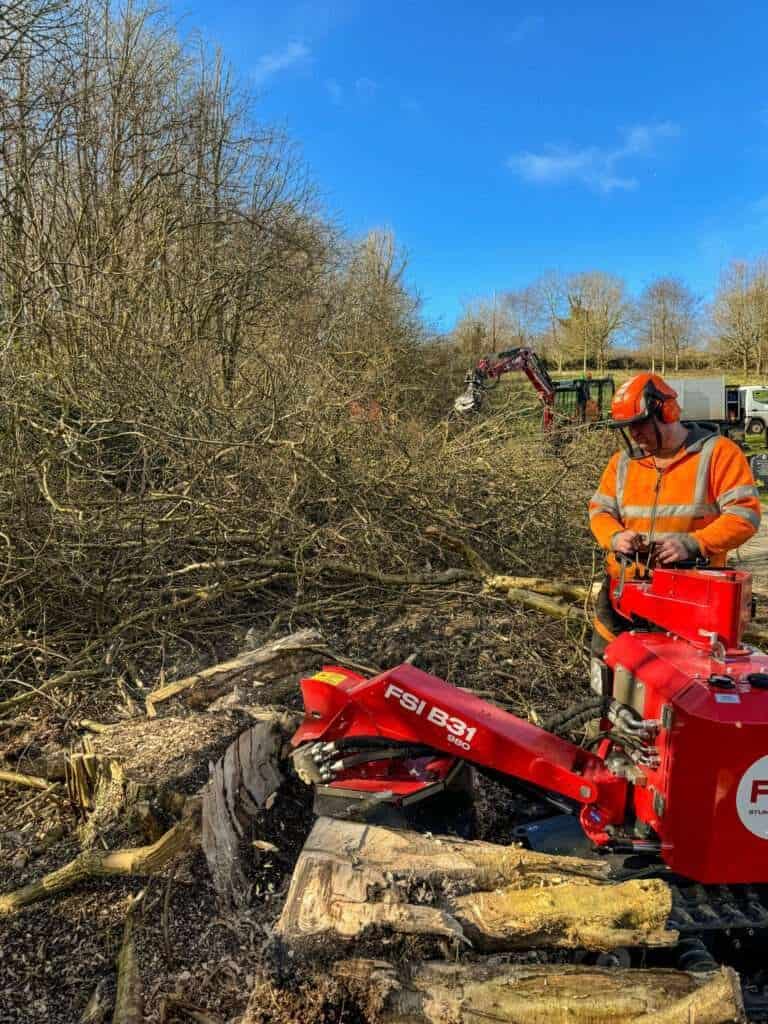
A stump grinder is a machine with a rotating cutting wheel fitted with carbide teeth. The operator swings the wheel across the stump, taking it down in layers until it is below ground level. The result is a pile of woodchip, which is used to fill the hole or taken away. Machines come in different sizes. Compact grinders can pass through a garden gate, while tracked machines are used on large or sloping sites. We explain more in our guide to arb machinery and stump grinders.
How long does it take?
The time depends on the diameter of the stump, the species, the condition of the wood and how easy it is to reach. A small garden stump can take less than half an hour. A large oak or beech with big surface roots may take several hours. Site access, such as a narrow path or steep bank, also affects the time. We can usually give a good estimate when we see the stump or a clear photo.
How deep does it go?
Normally the stump is ground 10 to 30 cm below ground level, which is enough for turf, shrubs and most planting. If you plan to build on the spot, lay foundations or install a hard surface, tell us in advance because a deeper grind, or full removal, may be needed.
What happens to the roots?
The grinder removes the stump and the upper roots, but the deeper roots stay in the ground and slowly decay. This is usually not a problem. Some species, however, send up suckers from remaining roots. Willow, poplar, cherry, plum and elm are well-known examples. If suckers appear, cut them back repeatedly or treat them, and tell us if you would like us to look at the root system.
Grinding or full removal?
Most customers choose grinding because it is quicker, cleaner and cheaper. Full stump removal, using an excavator, pulls out the stump and large roots in one go. It is more disruptive, but it makes sense where the whole area is to be dug over for building work. Our stump removal page describes both options.
What to do with the woodchip
Grinding produces a lot of material, often more than you expect. Chippings can be used to fill the hole and top it up with soil, spread as mulch around trees and shrubs, or taken away. Fresh chip uses nitrogen as it breaks down, so do not mix large amounts into soil where you plan to plant straight away. Instead, remove most of it and replace it with topsoil. Learn more about reusing chip in our guide to woodchip mulch.
Aftercare and replanting
- Level the hole with topsoil, firming it as you fill because it will settle.
- Top up in a few months if the ground sinks.
- Sow grass seed or lay turf once the soil has settled.
- If you plan to plant a new tree, choose a different position, a few metres from the old one, to avoid residual roots and disease.
If you would like help choosing a replacement, our tree planting team can advise on species and positions.
Safety and preparation
Stump grinders throw out chips and stones at speed, so only trained operators should use them. Before we start, we check for underground services such as water pipes, gas lines and cables. It helps if you let us know where any known services run, and move cars, garden furniture and toys out of the area.
Frequently asked questions
Can I plant straight away?
You can, but it is best to replace the woodchip with topsoil first and allow it to settle.
Will the stump grow back?
Ground stumps rarely regrow, though some species send up suckers from the roots.
Is stump grinding noisy?
Yes, but the work is usually over quickly. We let neighbours know where it makes sense.
Do you do stump grinding after felling?
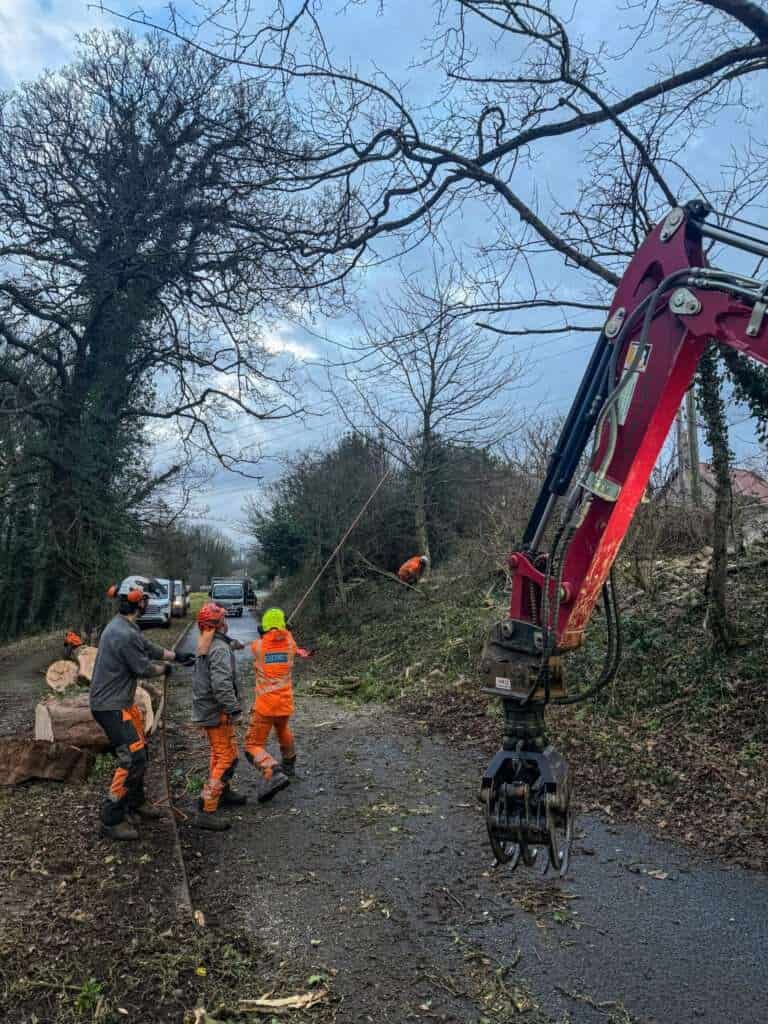
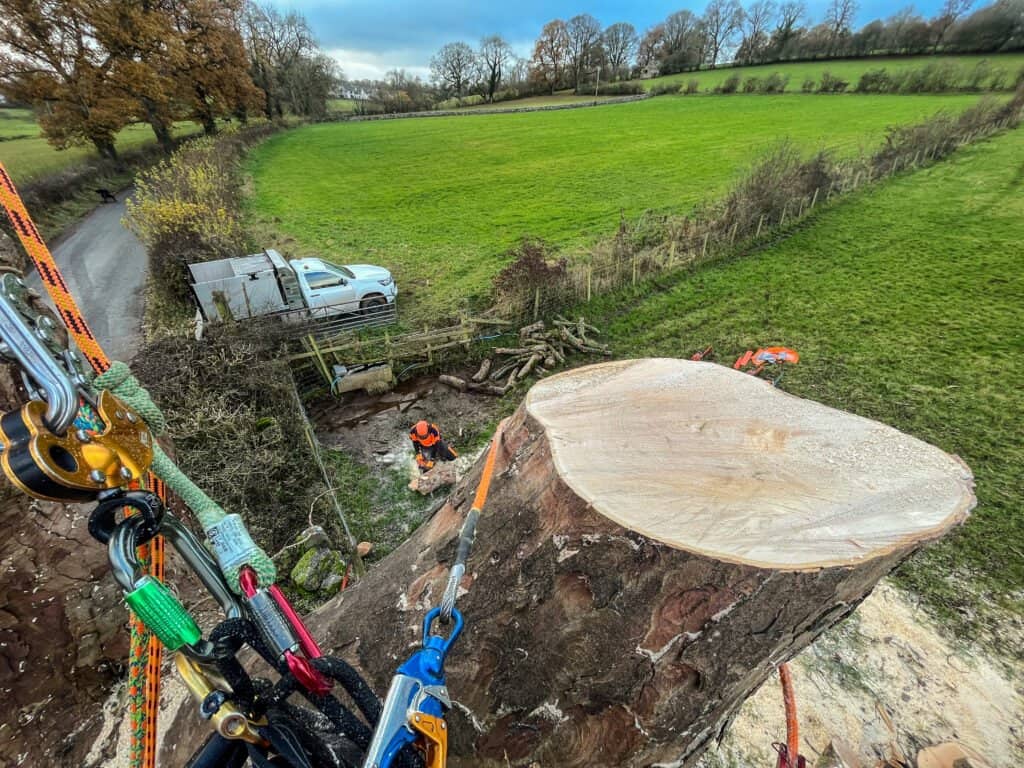
Yes. Many of our customers combine tree felling and stump grinding in a single visit, which saves time and money.
Get a quote
Whether you have one stump or twenty, Arborscape can help across West Cumbria, Carlisle, the Lake District and beyond. Call 01946 444224 or get in touch online to arrange a free quote.