Most trees are remarkably tough, and many Cumbrian trees have stood through storms for well over a century. But a tree that looks healthy from a distance can still hide a serious structural fault. Knowing what to look for helps you act early, which is usually cheaper, safer and better for the tree than waiting for a branch to fall. Here are ten warning signs that a tree may be dangerous, and what each one can mean.
1. A sudden or increasing lean
Many trees grow at an angle and are perfectly stable. The worry is a lean that is new, or one that is getting worse. Look for soil heaving on the side opposite the lean, or fresh cracks in the ground around the base. Either can mean the root plate is starting to move. If you see this, keep people and vehicles away and arrange an inspection promptly.
2. Cracks and splits in the trunk or main limbs
A vertical split in the trunk, or a crack where a large branch joins the stem, shows that the wood is under strain. Some cracks are only in the bark, but others run deep into the structure. A professional can tell the difference with a close inspection, and sometimes with a sounding mallet or a resistance drill.
3. Fungal growth at the base or on the trunk
Brackets, mushrooms and fungal skins growing on a tree are often a sign of internal decay. Some species rot the heartwood and hollow out the trunk. Others attack the roots and make the tree unstable even though the crown looks fine. Different fungi mean different levels of risk, so it is worth having the species identified rather than guessing.
4. Dead or dying branches
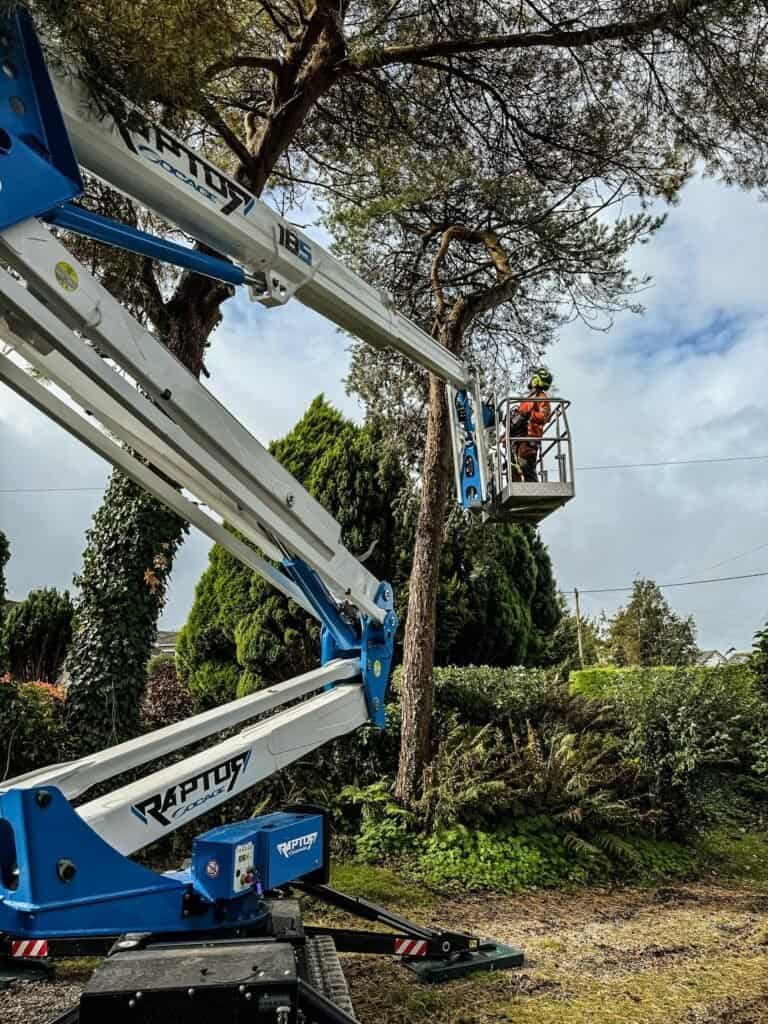
Deadwood in the crown is normal in older trees, but large dead limbs over a path, road or garden should not be ignored. Dead branches become brittle and can drop without warning, especially in wind. Removing them is a straightforward job for a qualified arborist, and our tree pruning team does it regularly.
5. Hollows and cavities
A hollow does not automatically make a tree unsafe. Many veteran trees live for decades with hollow trunks and are valuable habitats. What matters is how much sound wood remains around the cavity. A thin wall, or a cavity that opens into the roots, calls for a proper assessment.
6. Included bark and weak forks
Where two stems grow tightly together, bark can get trapped between them. This is called included bark, and it creates a weak joint that can split under load. Trees such as beech, maple, cherry and birch are prone to it. Early pruning or cabling can reduce the risk before it becomes serious.
7. Root damage and disturbance
Trenching, new drives, building work and raised soil levels can all damage roots. Because roots cannot be seen, the effects often show up a few years later as dieback or instability. If building work took place near a tree, keep an eye on it and ask for advice, particularly if the tree stands close to your home.
8. Thinning crown and early leaf drop
If a tree has fewer leaves than its neighbours, small or pale foliage, or drops its leaves early, it may be stressed by disease, drought or root problems. Ash trees showing these symptoms may have ash dieback, so read our guide to ash dieback symptoms or book an ash dieback survey.
9. Previous storm damage or poor pruning
Torn branches, snapped tops and old topping cuts leave wounds that decay slowly and produce weak regrowth. Trees that have been topped sprout fast, heavy shoots that are poorly attached and break easily. If a tree has been damaged or badly pruned, corrective work by a professional can make it much safer.
10. Targets nearby
Risk depends on what is underneath the tree as much as the tree itself. A defective tree in the middle of a field is a small concern. The same tree next to a house, play area, road or car park needs attention quickly. Always think about who and what could be hit.
What to do if you spot a warning sign
- Keep people, pets and vehicles away from the area under the tree if the risk looks immediate.
- Take dated photos so you can see whether a problem is changing.
- Do not climb or cut the tree yourself. Work at height and chainsaw use are highly skilled jobs.
- Book an inspection with a qualified arborist who can recommend the right level of work.
Our tree inspection and planning service covers visual assessments and detailed surveys. If you manage a number of trees, our guide on how often a tree condition survey should be done explains how to set a sensible schedule.
When removal is the right answer
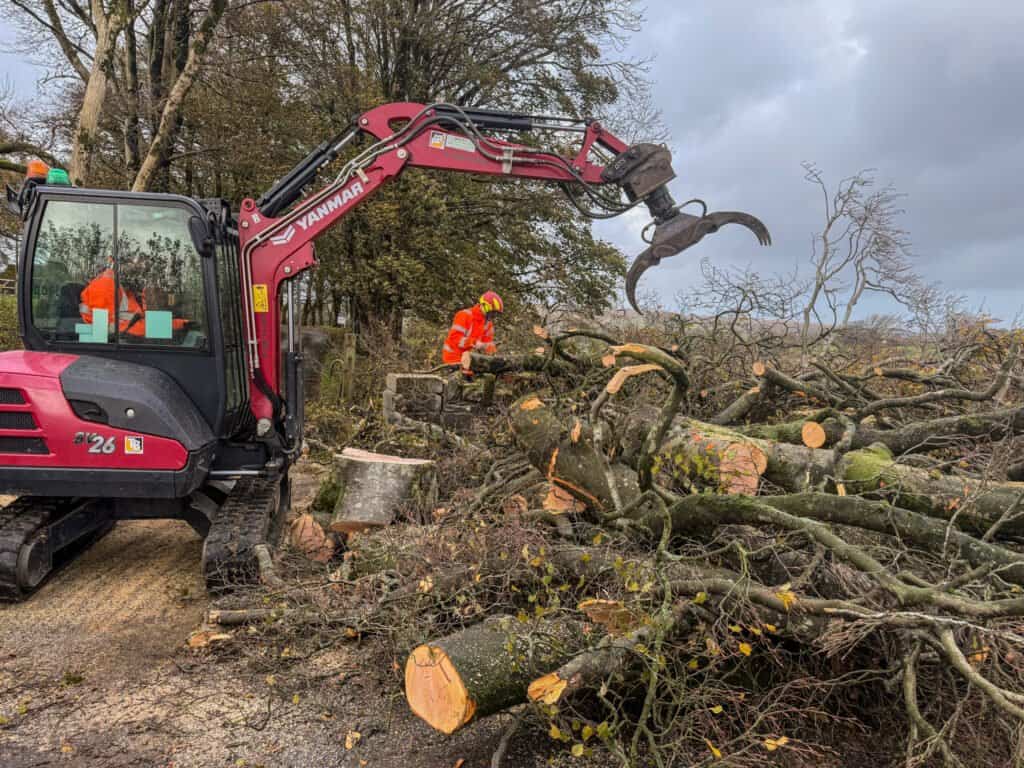
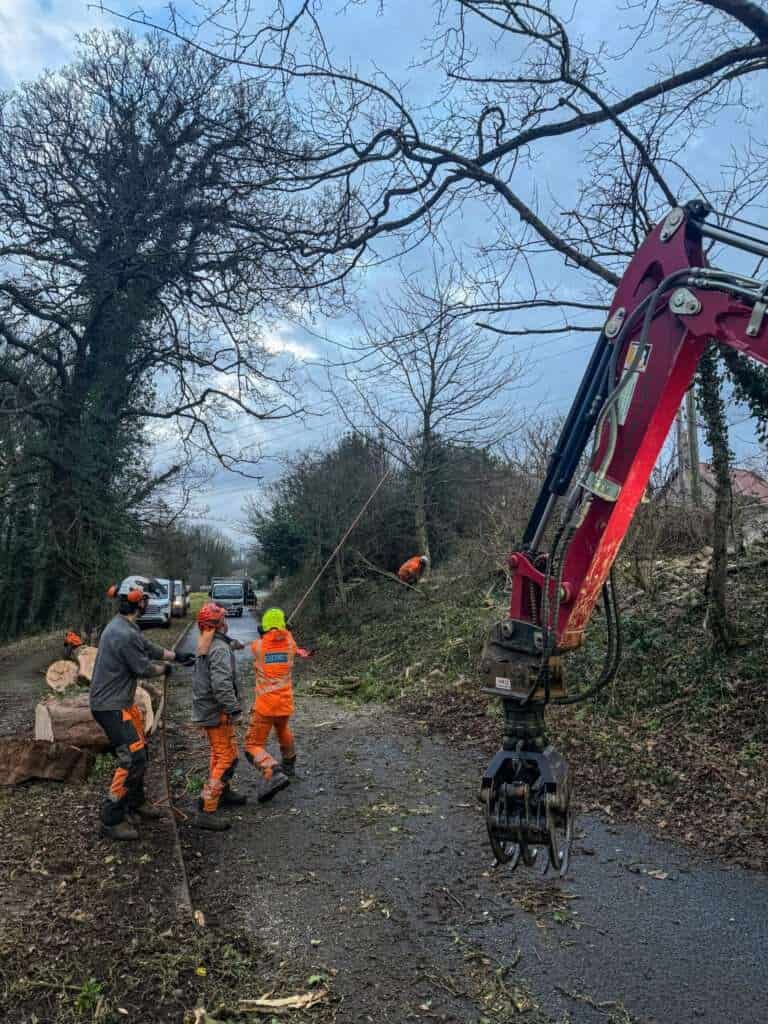
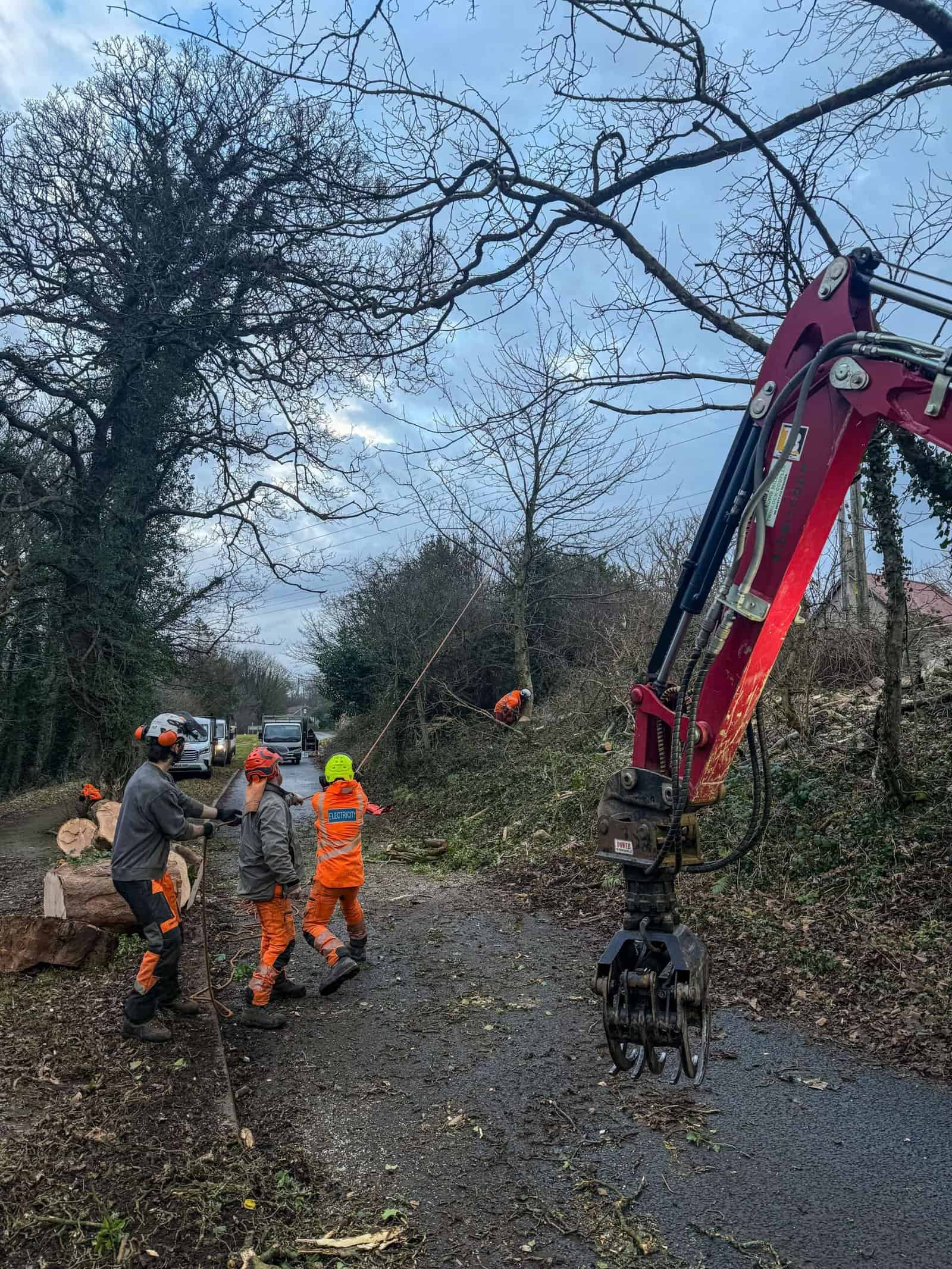
Most defects can be managed by pruning, cabling or monitoring. Where a tree is beyond saving, or the risk cannot be reduced to an acceptable level, controlled removal is the safest option. Read about our tree felling and tree removal services to see how we plan and carry out the work around homes, roads and power lines.
Frequently asked questions
How often should I check my trees?
A quick look twice a year, once in summer when trees are in leaf and once in winter when the structure is easy to see, is a good habit. Check again after any severe storm.
Does a hollow tree always need to come down?
No. Many hollow trees are stable. The amount of sound wood remaining matters more than the hollow itself.
Who is responsible for a dangerous tree?
Generally the landowner, which means you if the tree stands on your property. See our guide to tree owner responsibilities for more.
Need a second opinion?
If you are worried about a tree, call Arborscape on 01946 444224 or send us a message. We cover Workington, Whitehaven, Cockermouth, Carlisle, Penrith, Keswick, Kendal and the wider Lake District, and our team is available 24/7 for emergencies.