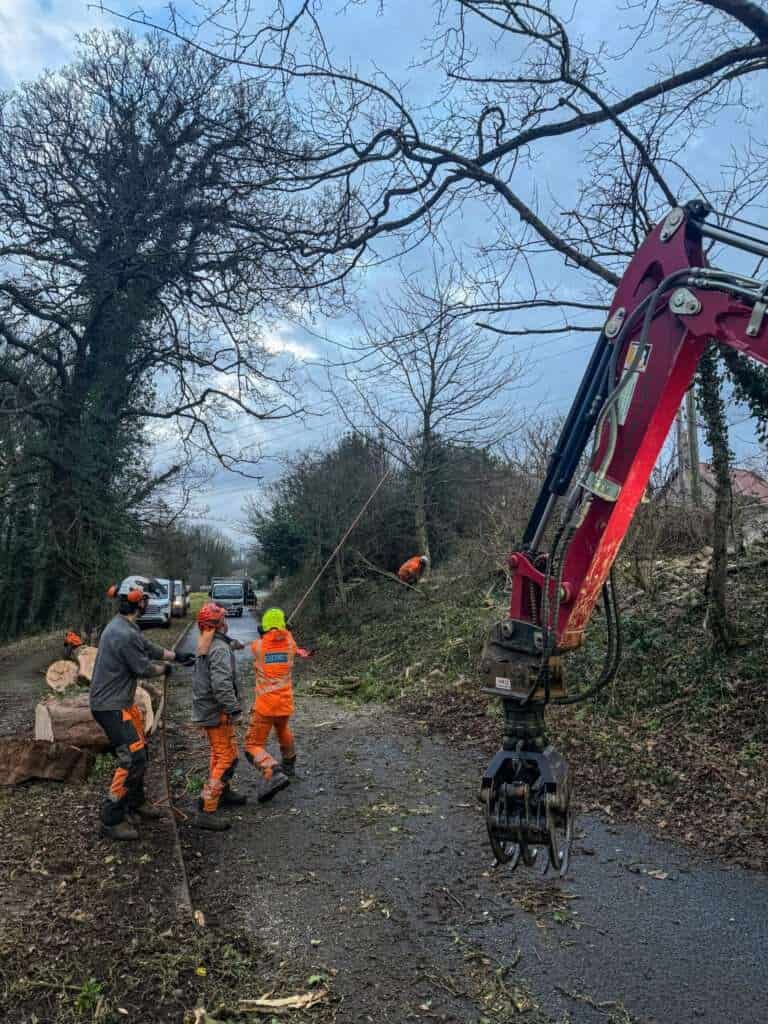
Tree care often involves a delicate balance between preservation, safety, and respect for the surrounding environment. At Whitehaven Cemetery, that balance recently became particularly important when several mature trees were identified as hazardous. Due to their deteriorated condition, Arborscape was called in to assess the risk and carry out specialist pruning and removal work to ensure the safety of visitors, staff, and nearby memorials.
Assessing the Risk
The trees in question had reached an advanced stage of decline. Structural weaknesses, extensive decay, and compromised branches meant they posed a real danger. In a setting like a cemetery, these risks are amplified. Paths used daily by visitors, historic headstones, and sensitive landscaping all needed to be protected throughout the operation.
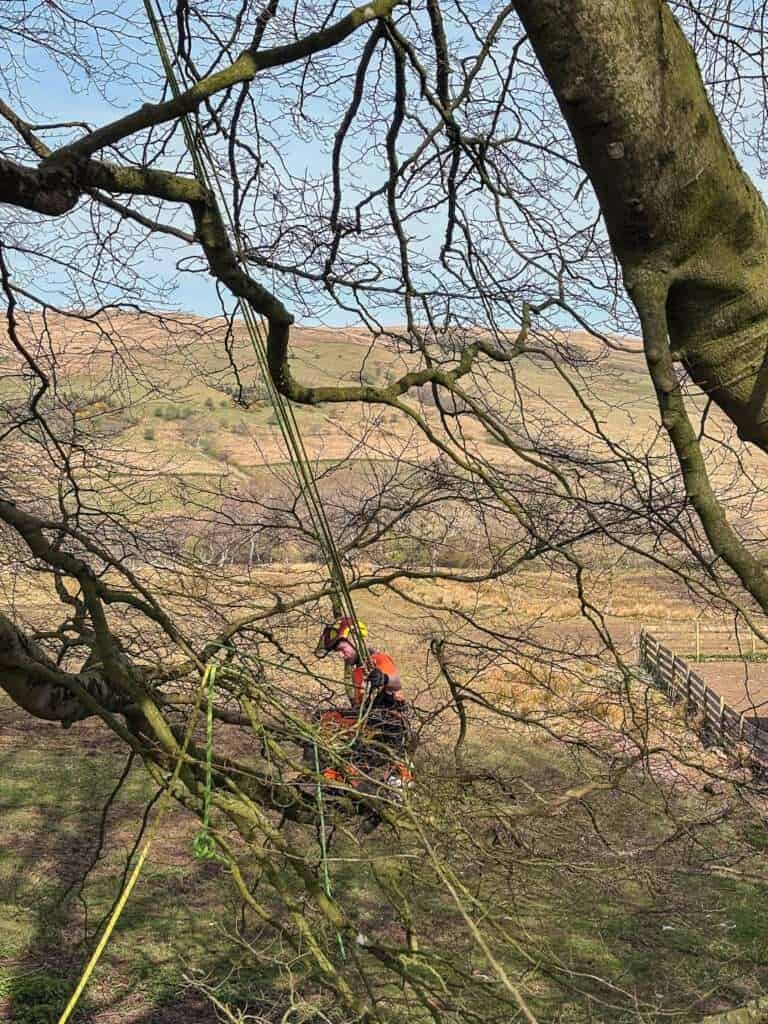
Ordinarily, arborists rely on rope and harness climbing techniques to access and manage trees. This traditional method allows for precise work and minimal disturbance to the surrounding area. However, the condition of these particular trees made climbing unsafe. Internal decay had weakened the structural integrity of the trunks and limbs, meaning they could not reliably support the weight of a climber.
Safety is always the top priority in professional tree work. After careful evaluation, the Arborscape team determined that a mechanised approach was the only responsible option.
Why Mechanised Cutting Was Necessary
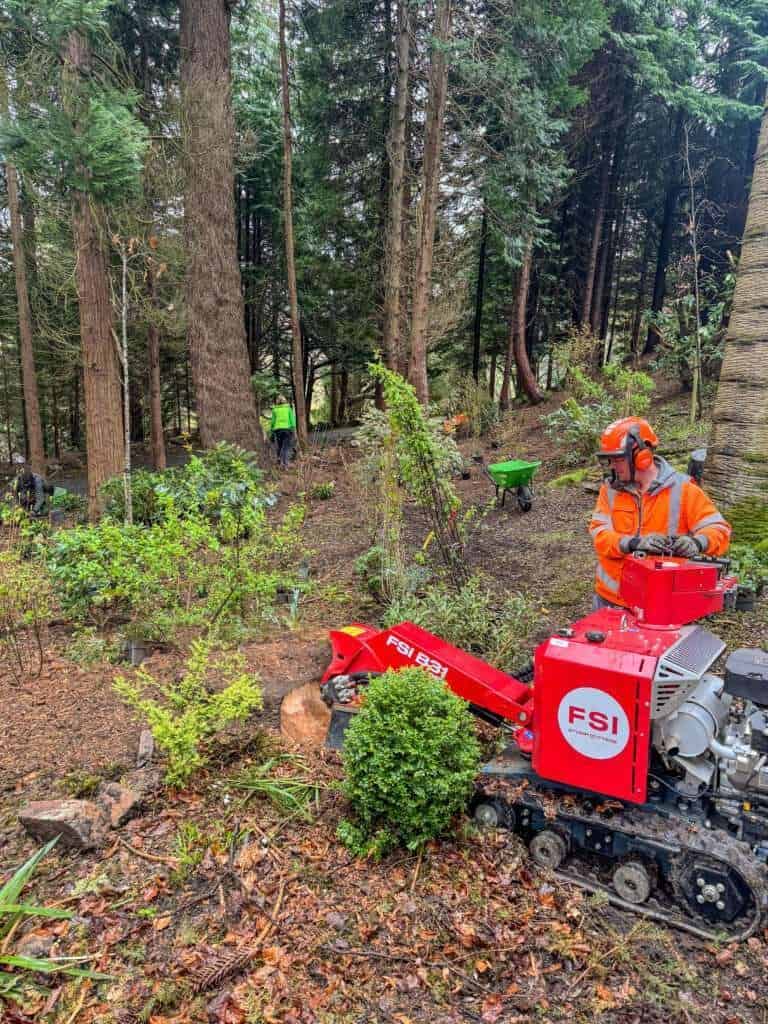
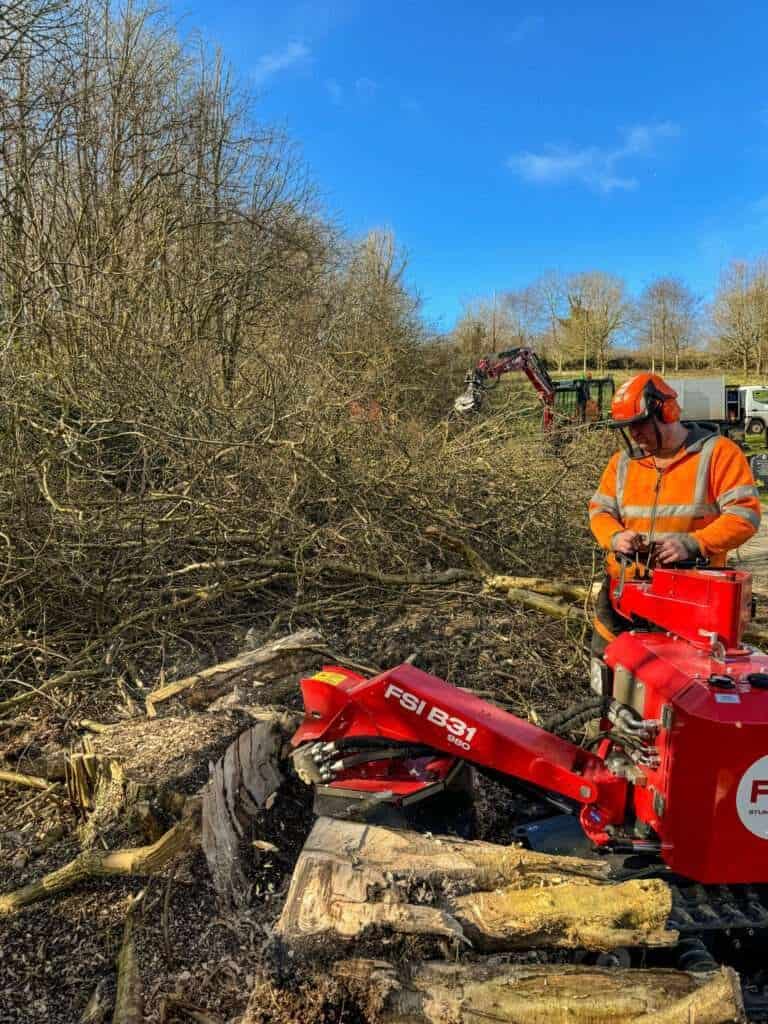
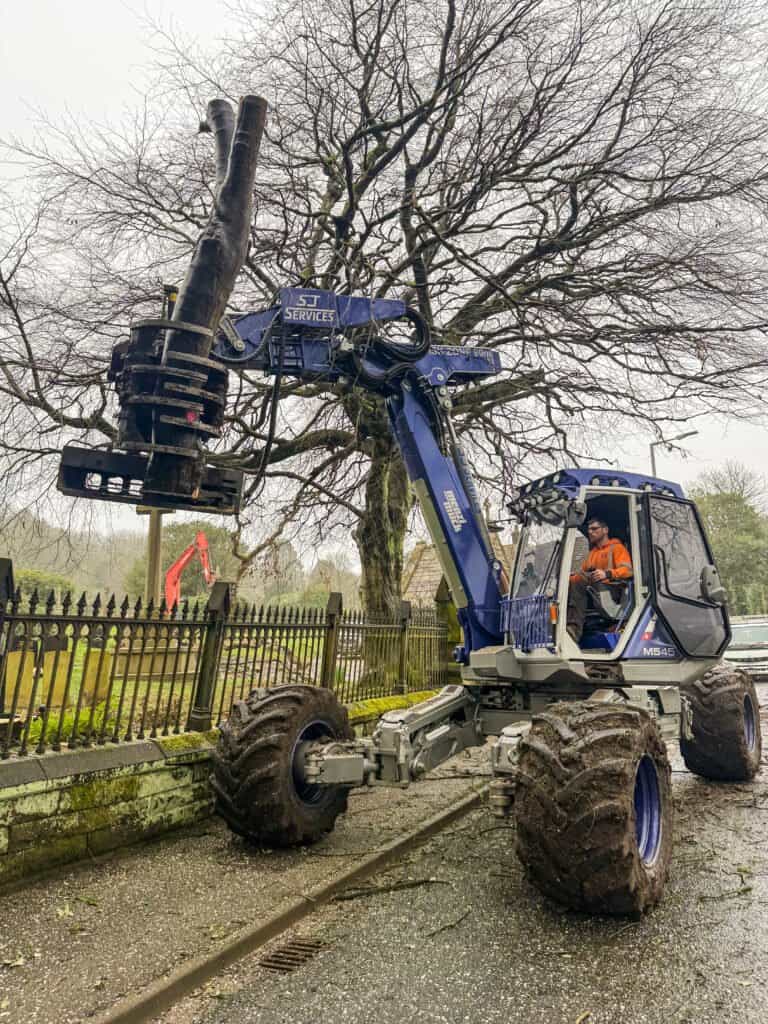
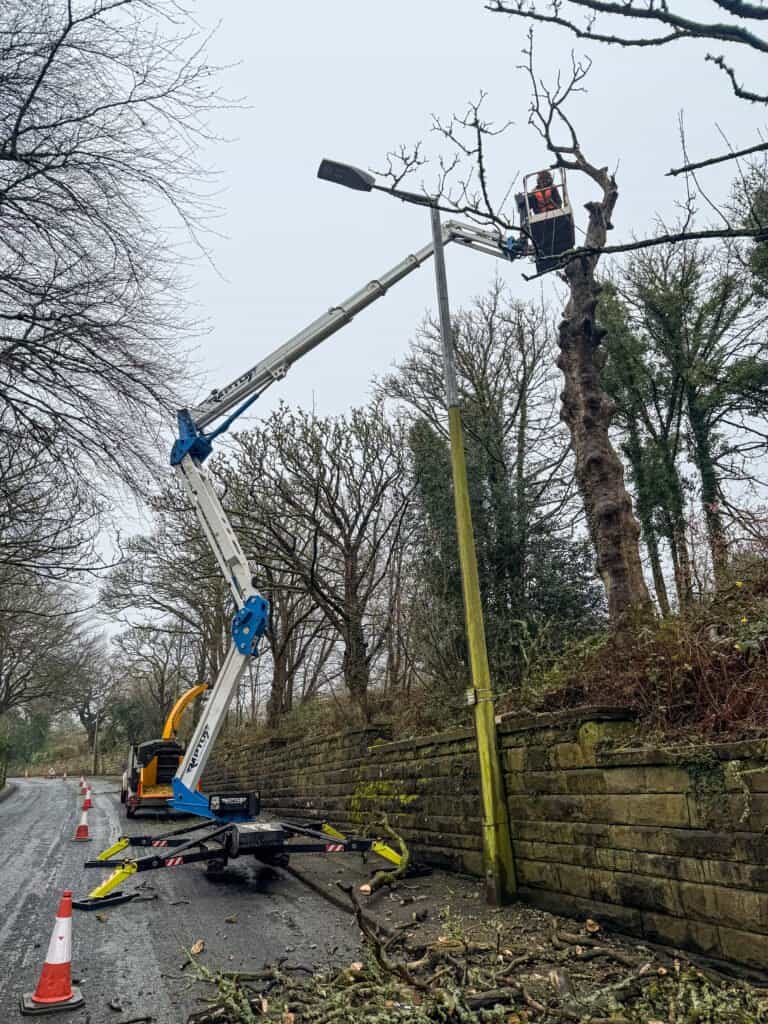
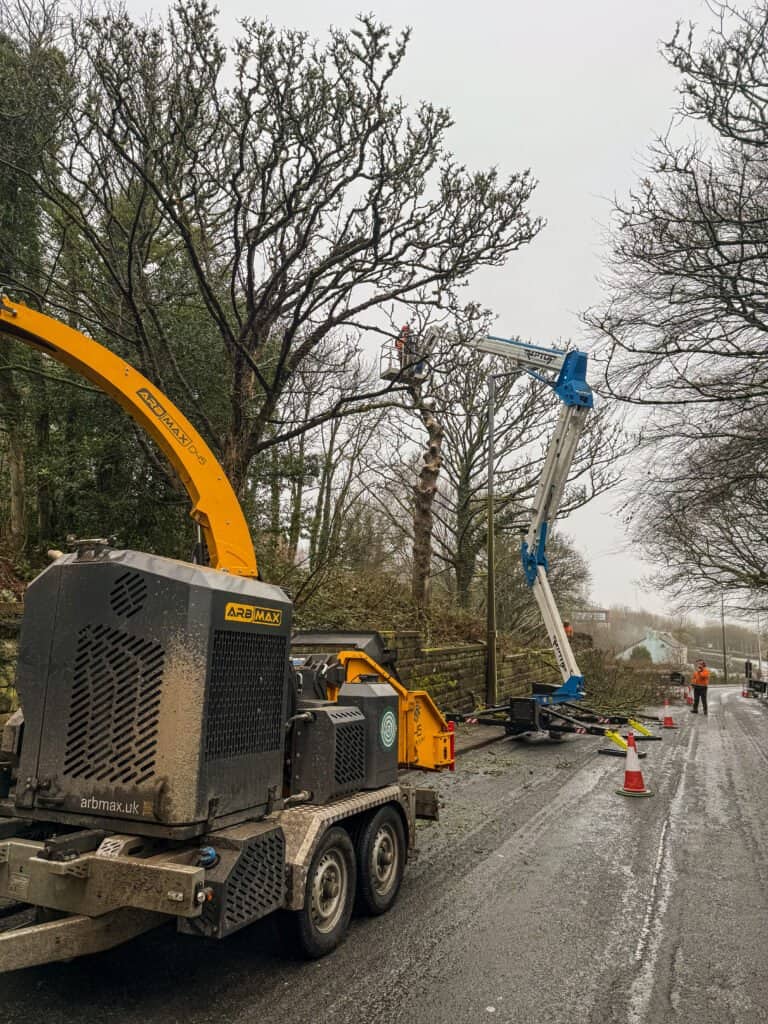
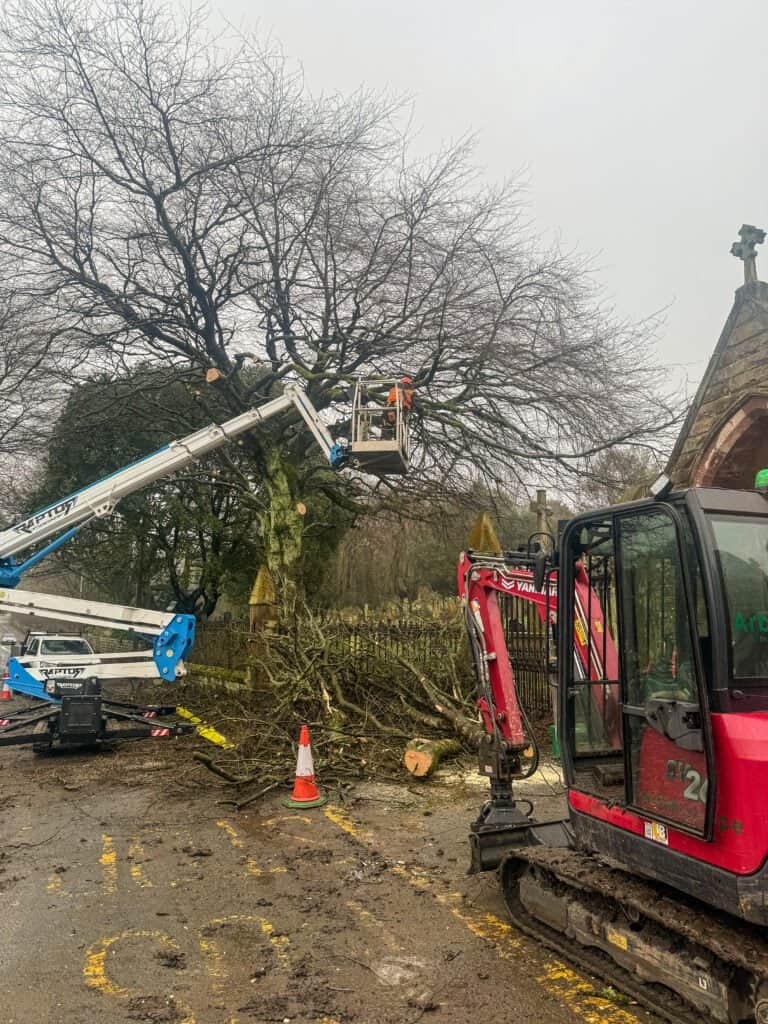
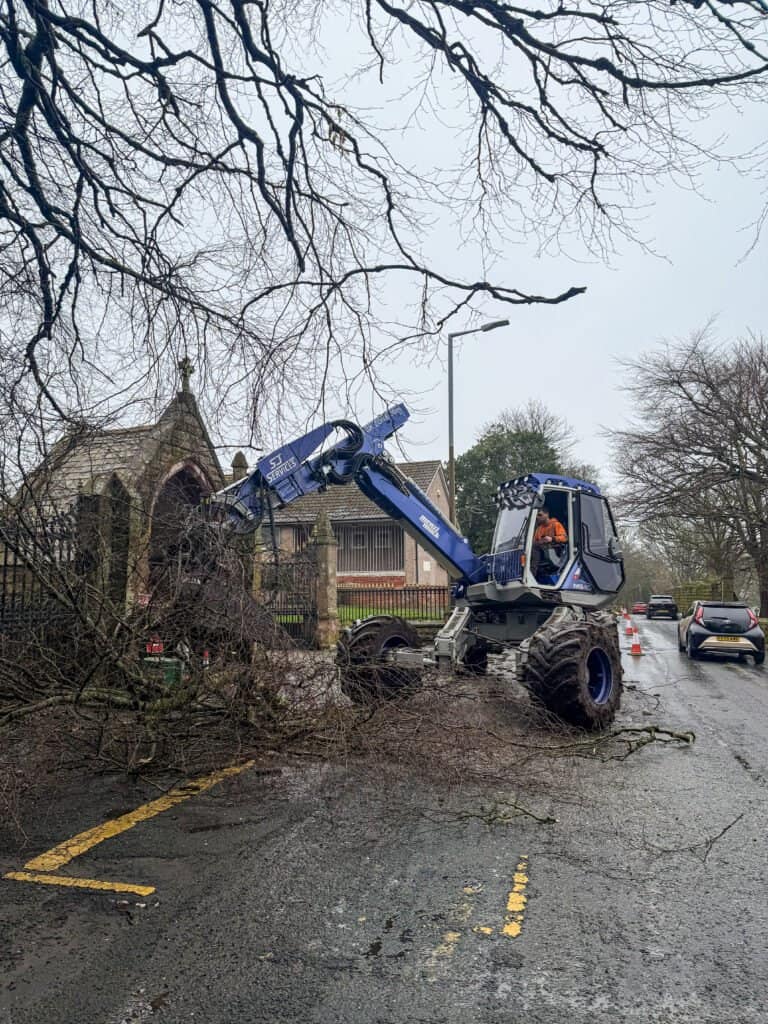
When trees become structurally unstable, mechanised equipment can provide a safer alternative to climbing. For the Whitehaven Cemetery project, Arborscape deployed specialist machinery capable of reaching and dismantling the trees from a secure external platform.
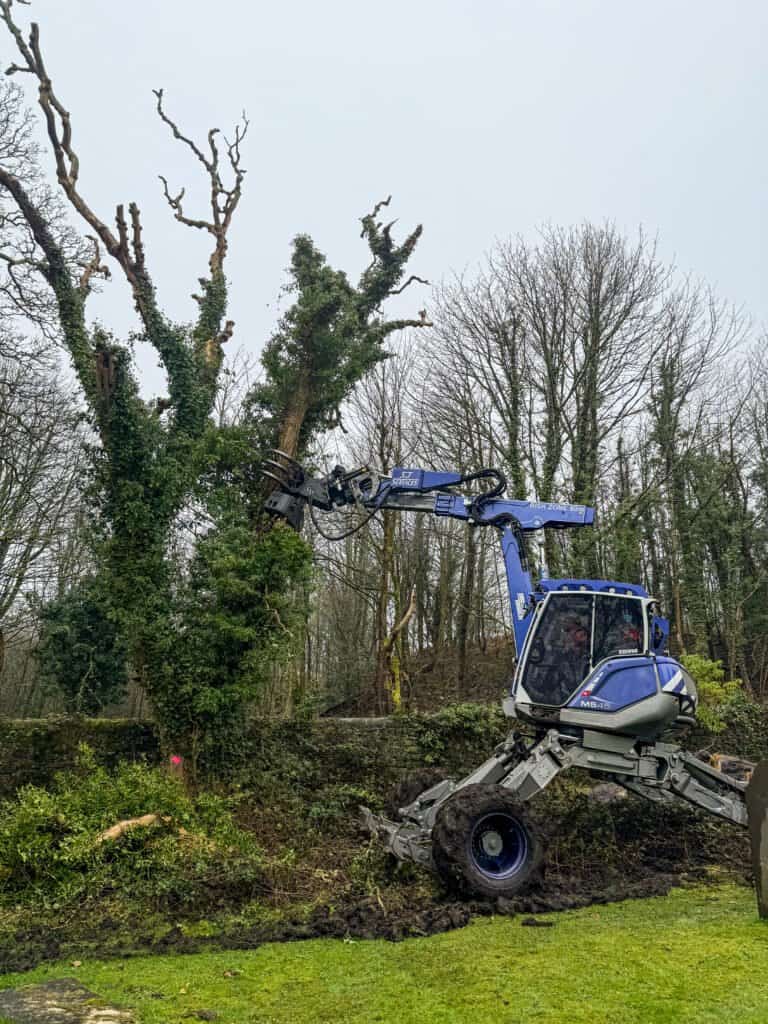
This approach removed the need for arborists to rely on the trees themselves for support. Instead, the equipment allowed the team to access high or unstable sections while maintaining full control of the cutting process. Using precision tools mounted on the machinery, branches could be removed in carefully managed stages, reducing the risk of sudden breakage or uncontrolled falls.
Mechanised cutting also provided an additional layer of protection for the surrounding environment. By working methodically and from a stable position, the team could guide sections of timber safely to the ground and avoid damage to nearby memorials, pathways, and landscaping.
Working Within a Sensitive Environment
Cemeteries present unique challenges for arboricultural work. Beyond the physical constraints of narrow paths and closely spaced monuments, there is a deep sense of respect that must guide every stage of the process.
Arborscape approached the project with careful planning and sensitivity. Protective measures were put in place around nearby memorials, and the work area was clearly managed to ensure the safety of visitors and staff. Every cut was planned with precision to prevent debris from impacting the surrounding grounds.
Noise and disruption were also kept to a minimum wherever possible. The team worked efficiently to complete the task within a limited timeframe while maintaining the calm atmosphere that visitors expect from the site.
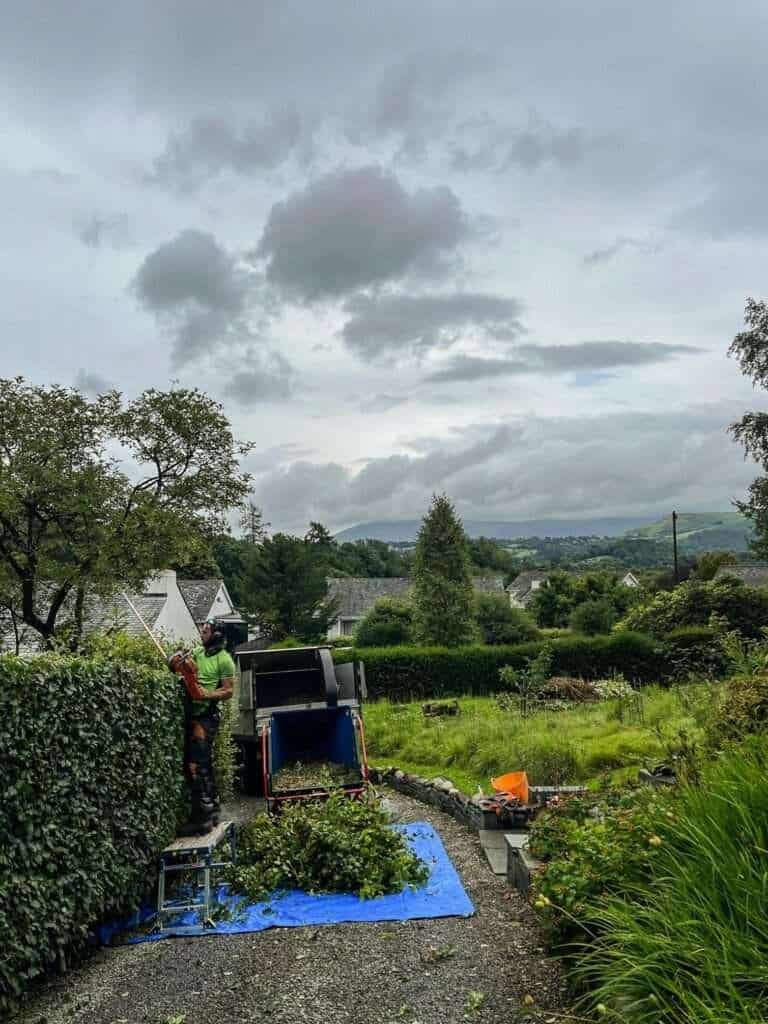
Chipping on site using the Arbmax D45, meant faster processing and the site was left clean and tidy.
Responsible Tree Management
Although the removal of mature trees is never taken lightly, it is sometimes necessary when safety becomes a concern. Trees that have suffered severe decay or structural failure can present unpredictable hazards, particularly in public spaces.
By choosing a mechanised method suited to the conditions on site, Arborscape ensured the work was completed safely, professionally, and with minimal impact on the cemetery’s landscape.
Projects like this highlight the importance of regular tree inspections and proactive management. Identifying structural issues early can often allow for preventative pruning rather than full removal. However, when trees reach a stage where they become dangerous, specialist techniques and experienced arborists are essential to managing the risk.
Need your trees assessed and dealt with before they become hazardous?
A Safer Landscape for Visitors
With the hazardous trees safely removed and surrounding areas carefully protected, Whitehaven Cemetery can continue to offer a peaceful and secure environment for visitors. The project demonstrates how modern arboricultural techniques, combined with thoughtful planning, can address even the most challenging tree safety situations.
Arborscape remains committed to delivering professional tree care that prioritises safety, environmental responsibility, and respect for the communities and landscapes they serve.