
Ash Dieback Surveys in Cumbria
Is Ash Dieback Affecting Your Trees?
Ash dieback is a fungal disease that has spread across the UK and is now widespread in Cumbria. Affected ash trees lose leaves, develop dead branches and can become brittle, which makes them unsafe near roads, paths, homes and play areas. Our arborists survey ash trees, record their condition and advise what should be done. Call 01946 444224 to arrange a survey.
Not sure what to look for? Read our guide to the symptoms of ash dieback.
Our Ash Dieback Service
Condition surveys
Each ash tree is inspected and its condition recorded.
Risk assessment
Trees beside roads, buildings and public spaces are prioritised.
Safe felling
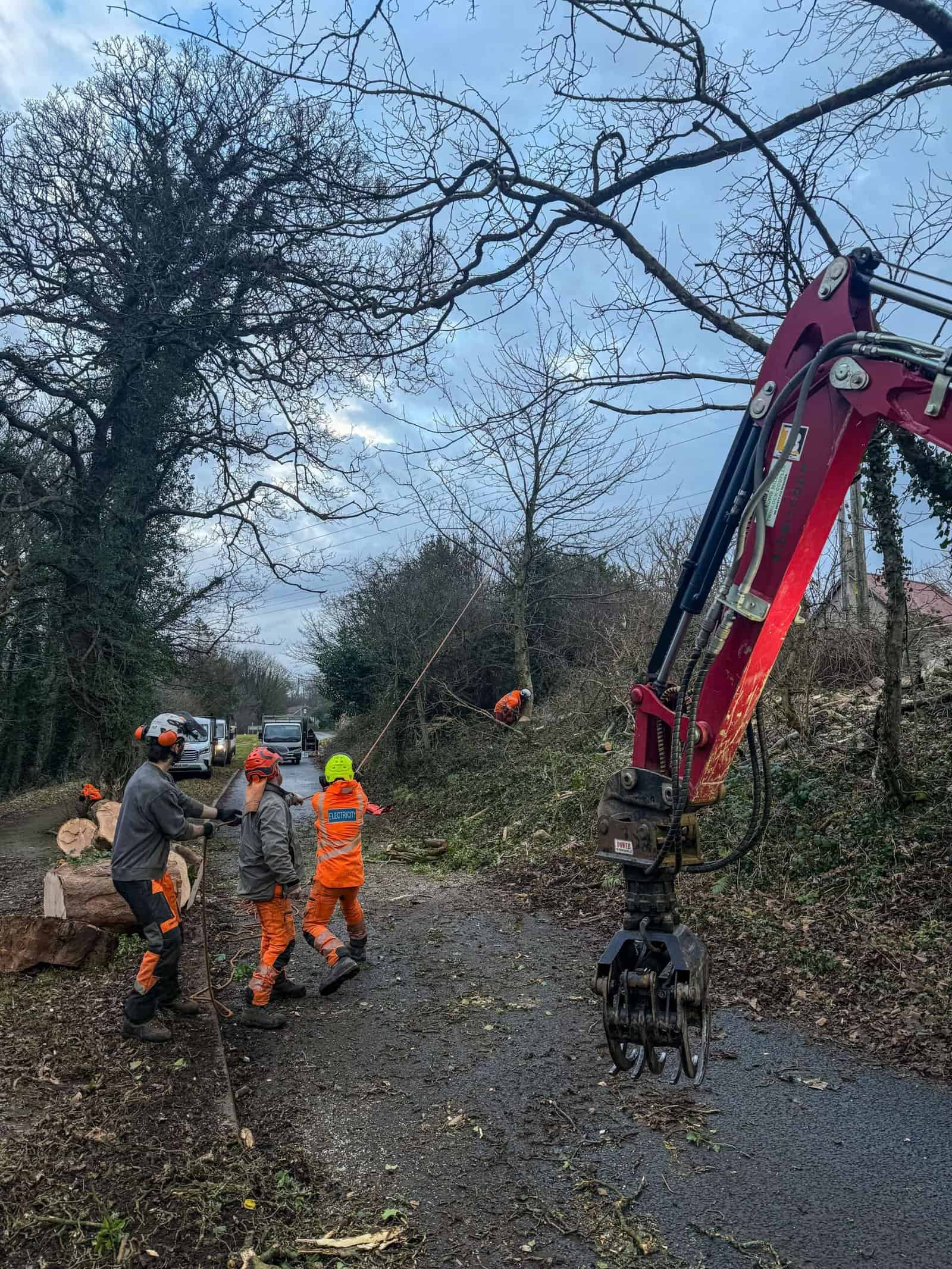
Dangerous trees are dismantled safely and the site cleared.
Why Ash Dieback Trees Need Attention
Trees weakened by dieback can shed limbs or fail without warning, and the wood becomes more dangerous to cut as the disease advances. Landowners have a duty of care to people who use the land, so it is sensible to survey ash trees early and act on the highest-risk trees first. We work for homeowners, farms, estates and commercial clients, see our commercial tree surgery service.
If a tree must come down, our tree removal team can do it safely, followed by stump grinding. You can also read our guide to tree surgery costs. Arborscape covers Workington, Whitehaven, Cockermouth, Carlisle, Penrith, Keswick, Ambleside and the wider Lake District.
How an Ash Dieback Survey Works
A survey starts with a walk around the site to identify every ash tree and record its position, size and what stands beneath it. Each tree is then inspected from the ground for the signs of the disease: thinning crowns, dead tips, lesions on the bark and basal lesions near the root collar. Where a tree is close to a road, path or building, we look more closely at the stem and the larger limbs.
Each tree is given a condition rating, from healthy through to severely declining, together with a note of the risk it poses. Because ash dieback often leaves wood brittle, a tree that looks half alive can still be dangerous, so we pay particular attention to trees growing over homes, play areas, car parks and highways.
What is recorded
- Species, height and trunk diameter.
- Crown condition and percentage of dieback.
- Presence of bark lesions, fungal fruiting bodies and decay.
- Nearby targets such as buildings, roads and rights of way.
- Recommended action and a timescale.
What Your Survey Report Tells You
You receive a clear written report that sets out which trees can stay, which should be monitored and which need work. We use plain language and, where useful, photographs and a simple map, so you can share the report with insurers, neighbours, a parish council or your landlord.
The report prioritises work by risk. Trees next to a road or building are placed at the top of the list, while those in the middle of a field can often be left to decline naturally. This helps you spread costs over time rather than paying for everything at once.
If you manage a number of trees, our guide on how often a tree condition survey should be done explains how to set up a sensible re-inspection cycle.
Trusted Local Tree Care
£10m insured
Full public liability cover on every job.
NPTC certified
Trained, qualified climbers and ground crew.
24/7 emergency
Storm damage and fallen trees, day or night.
Monitor, Prune or Remove: Choosing the Right Option
Not every infected ash needs to come down immediately. The right action depends on how far the disease has progressed and what the tree could hit if it failed.
Monitor
Healthy or lightly affected trees away from people and property can be left and rechecked each year. Some ash trees show a degree of natural tolerance, and keeping them can help to preserve genetic diversity.
Prune
Where only part of the crown is affected, removing dead branches can make a tree safe for a few more years. Our tree pruning team carries out this work.
Remove
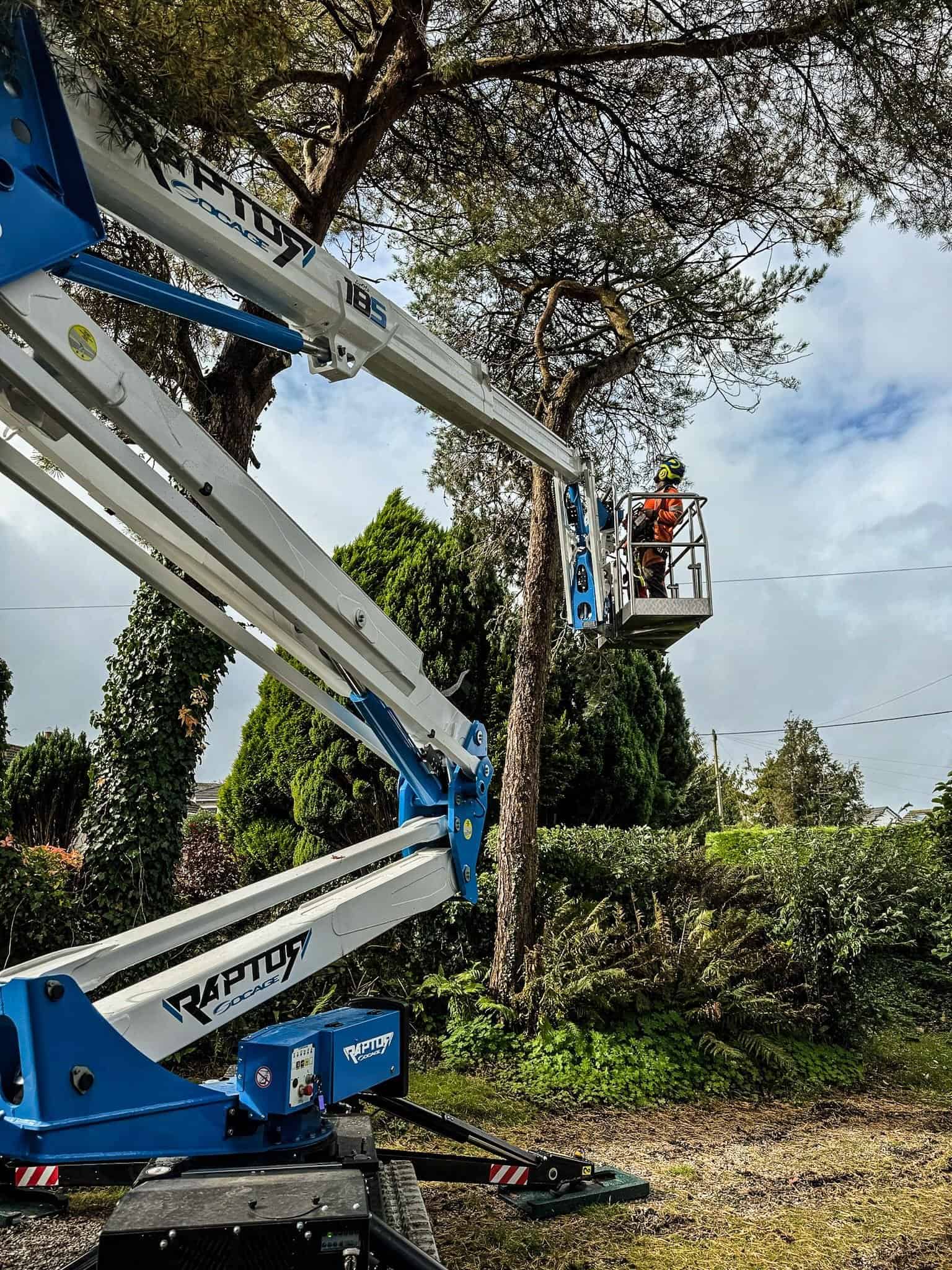
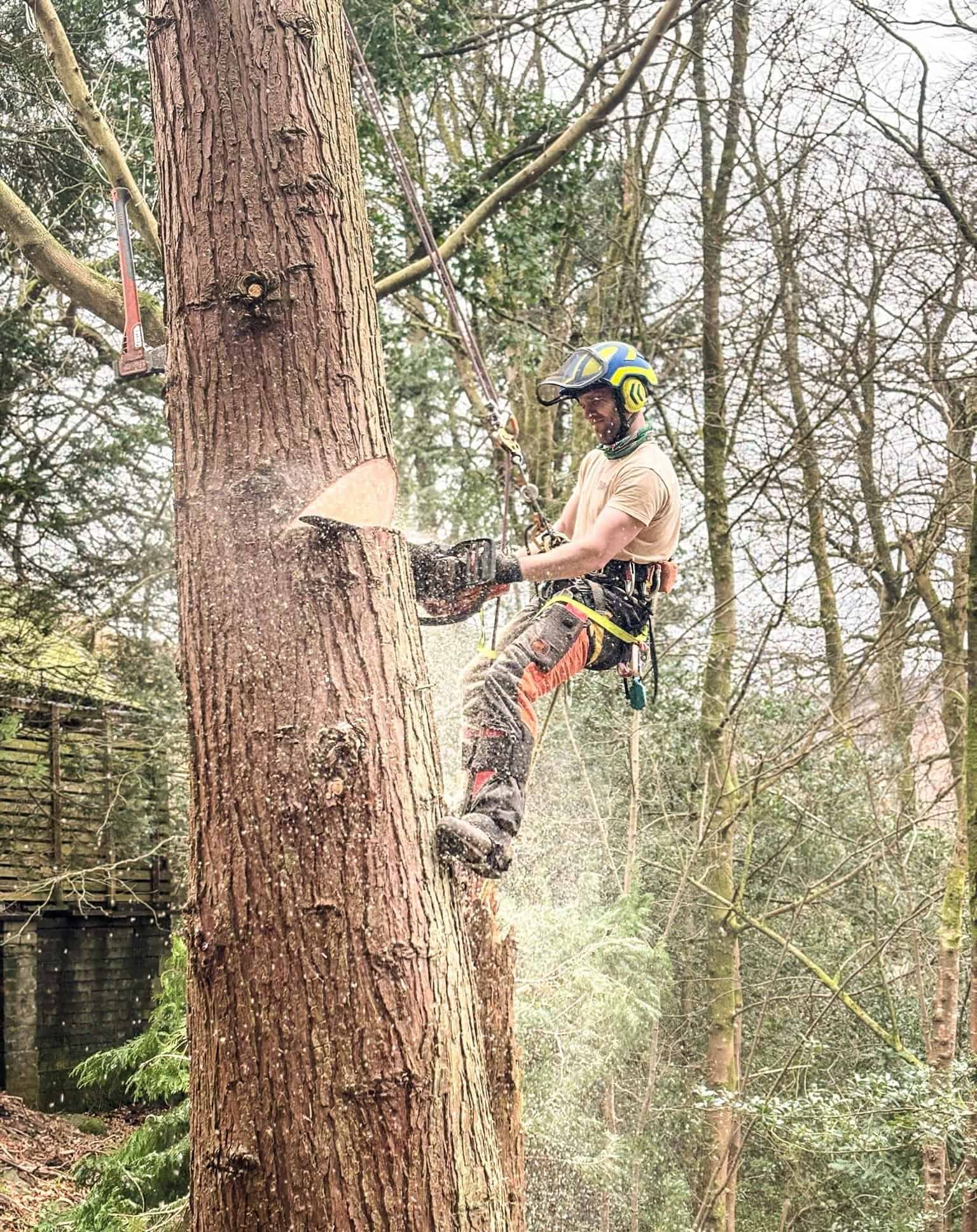
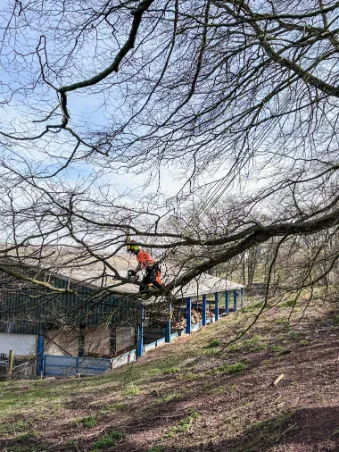
Severely affected trees, particularly those with basal lesions or heavy decay, are best taken down. Because ash wood becomes brittle, climbing an infected tree can be dangerous, so we often use a mobile access platform. See our tree felling page for how we plan the work.
Replanting After Ash Dieback
Losing ash trees leaves gaps in hedgerows, woodland edges and gardens, and it is a chance to plant something more resilient. A mix of species spreads the risk, so a single disease cannot strip a whole landscape. Native species such as oak, field maple, hornbeam, birch, rowan and hazel are good choices in many parts of Cumbria.
Our tree planting service can supply and plant replacements, and chip from the felled trees makes an excellent mulch, as explained on our woodchip and mulch page.
Responsibilities for Owners and Managers
Landowners have a duty to take reasonable care that their trees do not put people or property at risk. With ash dieback this means looking at trees near roads, paths and buildings, acting on advice and keeping a record of what you have done. Businesses, schools, parish councils and housing providers should be especially careful. For further reading see our commercial tree surgery page, and to speak to someone about a survey call 01946 444224. We cover Workington, Whitehaven, Cockermouth, Carlisle, Penrith, Keswick, Kendal and the wider Lake District, and we can usually arrange a survey within days of your enquiry. If a tree is already unsafe, our emergency team is available at any hour.
Frequently Asked Questions
How do I know if my ash tree has dieback?
Common signs are thinning crowns, dead twigs and branches, dark patches on the bark and leaves that wilt in summer. A survey confirms the cause and the risk.
Does every infected ash tree need to come down?
No. Some trees can be monitored or pruned. Trees close to roads, buildings or paths are more likely to need felling.
Can you deal with ash trees near roads and power lines?
Yes. We plan this work around traffic and utilities, using specialist equipment where needed.