
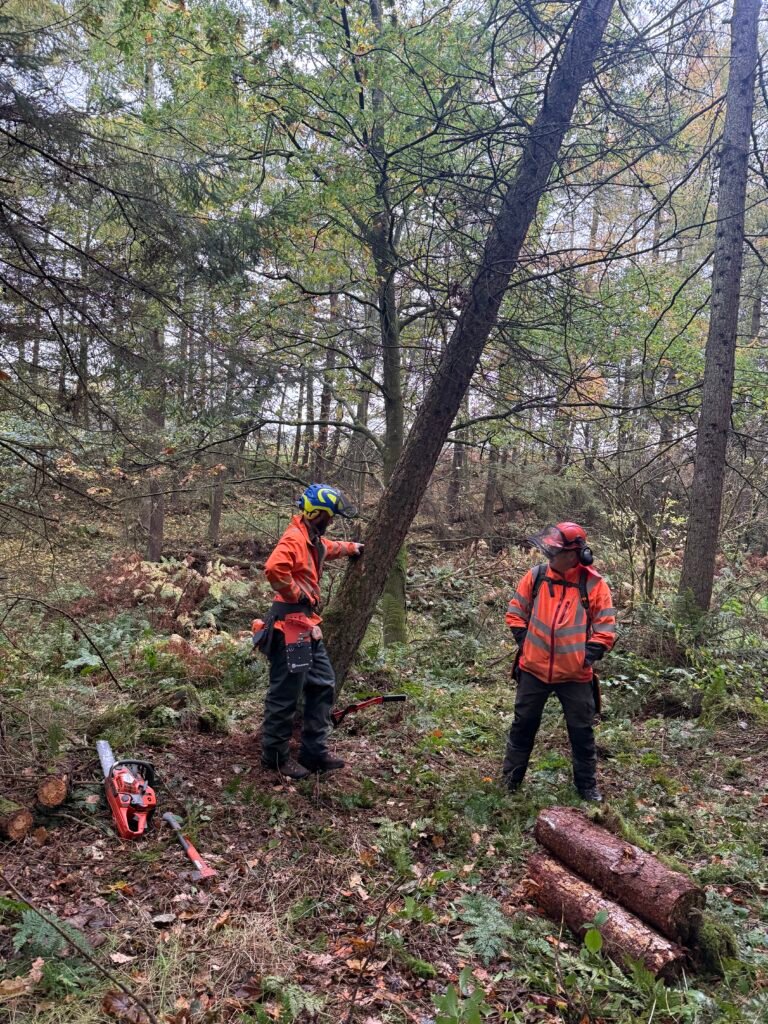
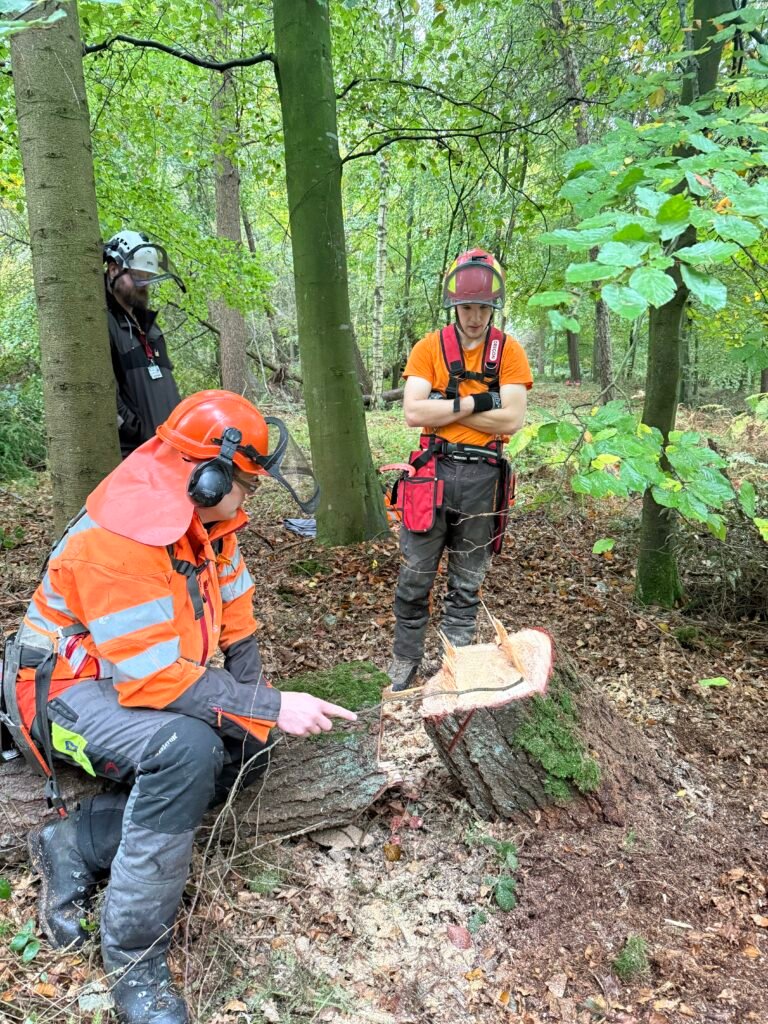
As the colder months are upon us with the risk of severe weather, even as we approach Spring, our teams are once again taking proactive steps to prepare for the challenges that storms can bring. Today, our field operatives are undertaking specialist Windblown Trees Training and Certification — an advanced and highly technical qualification designed to equip them with the skills and confidence to respond safely and efficiently when storm damage strikes.
This training is a crucial part of our Emergency Response Strategy, ensuring we are not only ready to react quickly but also meet all compliance and safety regulations that govern high-risk tree and woodland work.
Why Windblown Trees Training Matters
Preparing for Winter, when storms hit, fallen and uprooted trees can cause serious disruption — blocking roads, damaging infrastructure, and posing significant hazards to the public and to emergency responders. Dealing with these situations safely is not as simple as removing debris; windblown and uprooted trees are unpredictable, often under immense tension, and can move suddenly as they are being cut.
That’s why only trained and certified operatives should handle this type of work. The Windblown Trees certification (recognised nationally through Lantra or City & Guilds NPTC) provides specialist instruction on assessing, cutting, and clearing trees that have been uprooted or partially blown over during storms. It covers hazard awareness, risk assessment, chainsaw handling, the use of mechanical aids such as winches, and emergency procedures — all essential skills for working safely in these complex conditions.
Building Competence and Confidence
Our teams are completing the Level 3 Award in Severing Uprooted or Windblown Trees Using a Chainsaw, a demanding practical qualification that focuses on safe techniques for dealing with trees that are uprooted, lying under tension, or entangled with others.
Before attending this course, each participant must already hold baseline chainsaw qualifications — including Chainsaw Maintenance and Cross-cutting and Felling and Processing Trees up to 380mm — ensuring they have solid foundational experience before progressing to this advanced level.
The training is led by accredited instructors with real-world forestry and arboricultural experience. During the sessions, our operatives work through realistic storm-damage scenarios, learning how to recognise unstable trees, plan safe cutting sequences, and release tensioned wood safely. These are skills that save lives — both their own and those of others working nearby.
Part of Our Emergency Response Strategy
Investing in this training is not just about ticking a compliance box. It’s about readiness.
Our Emergency Response Strategy depends on having fully qualified teams who can mobilise rapidly when storms, high winds, or flooding events cause widespread tree damage. By ensuring our staff have the necessary competence to manage windblown and fallen trees, we can respond faster, work more efficiently, and reduce the risks to both our teams and the public.
In recent years, extreme weather events have become more frequent and more severe. Each winter brings unpredictable challenges — and every minute counts when restoring access, clearing roads, or supporting utility and emergency services. This proactive training ensures that we can meet those demands head-on.
Commitment to Safety and Compliance
Safety is at the heart of everything we do. By completing the Windblown Trees certification, our teams are demonstrating their commitment to working to the highest industry standards, in line with the Health and Safety Executive (HSE) guidelines and relevant forestry and arboricultural codes of practice.
Our compliance framework requires that all chainsaw and tree-related operations are carried out by competent, certified individuals. This ensures that our response activities remain fully compliant, auditable, and aligned with both client expectations and national safety legislation.
Ready for Whatever Winter Brings
As we move into the winter season, this training reinforces our ability to respond quickly and safely to the challenges of severe weather. Whether supporting emergency services, restoring access to critical infrastructure, or keeping our communities safe, our teams stand ready — skilled, certified, and confident in their ability to handle even the most complex storm damage.
By investing in our people and prioritising specialist training like Windblown Trees Certification, we’re not just preparing for winter — we’re building resilience, professionalism, and safety into everything we do.