
Enhancing Health, Form & Ecology
Pruning Willows: Salix spp. are iconic trees known for their graceful, flowing branches and strong ecological value. From the famous weeping willow Salix babylonica to the vibrant Salix caprea, and the towering white willow Salix alba, these trees are celebrated in gardens, parks, and waterside landscapes. Pruning is essential for maintaining structural integrity, encouraging vigorous growth, and maximizing ecological benefits.
Ecological Benefits of Willow Trees
Willows are not just beautiful—they are ecological powerhouses:
- Wildlife Habitat: Dense branching provides nesting and roosting sites for birds, including warblers, finches, and owls.
- Food Source: Willows are early bloomers, providing nectar for bees and pollen for other pollinators. Leaves feed caterpillars, supporting songbirds.
- Water Management: Willows stabilise riverbanks and lakesides with extensive root systems, reducing soil erosion and improving water quality.
- Carbon Sequestration & Air Quality: Fast-growing willows capture carbon efficiently and produce oxygen while filtering airborne pollutants.
- Biodiversity Support: Willow bark, wood, and leaves host insects and fungi that form the base of complex food webs.
Pruning responsibly preserves these ecological functions while enhancing tree health and aesthetics.
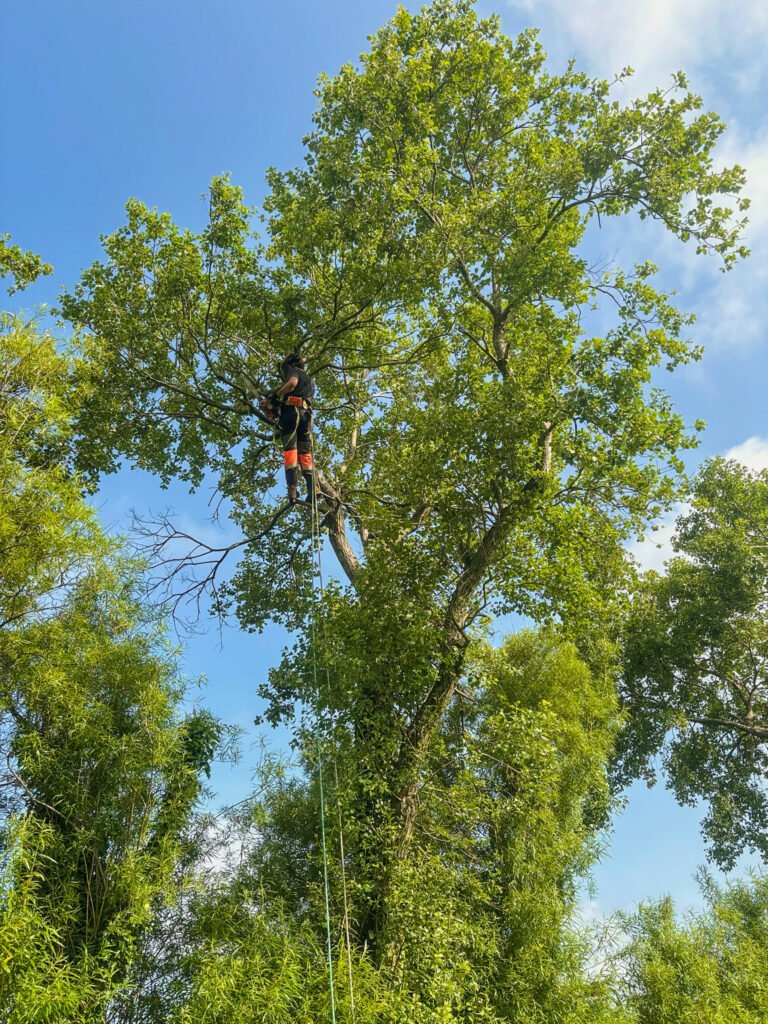
Pruning Willow – When Is The Best Time
Willows are vigorous growers, but improper pruning can lead to stress and disease:
- Best time: Late winter or early spring, before new growth begins.
- Avoid heavy pruning in summer, as sap flow is high and new shoots may become weak.
- Light trimming can be done during the growing season to maintain shape, especially for ornamental varieties.
Pruning Specific Willow Species
Weeping Willow Salix babylonica
- Iconic for its sweeping, cascading branches.
- Prune lightly to remove dead, damaged, or crossing branches.
- Maintain the graceful silhouette—avoid hard cutting or topping.
- Selectively shorten overlong branches to prevent them from touching the ground or obstructing paths.
Goat Willow Salix caprea
- Known also as pussy willow because of distinctive catkins.
- Prune goat willow in late winter or early spring during its dormant season by removing dead, diseased, or crossing branches.
- Use sharp shears for clean cuts and cut back to the desired shape, or for a more drastic cut, prune back to an old branch to encourage new growth.
- For younger plants, you can prune to shape, while mature trees generally only need deadwood removal
White Willow Salix alba
- A large, long-lived willow valued for shade and ornamental beauty.
- Formative pruning when young encourages a strong central leader.
- For mature trees, limit pruning to dead, diseased, or structurally weak limbs.
- Remove crossing branches to prevent canopy congestion and breakage during storms.

Pruning Willow – Techniques & Tips
- Remove Dead or Diseased Wood: This reduces the risk of fungal infections and improves overall tree health.
- Thin Crowded Branches: Light thinning enhances airflow, supports undergrowth, and prevents canopy stress.
- Coppicing or Pollarding (Optional): Many willow species respond well to coppicing or pollarding, which can rejuvenate growth and produce straight stems for ecological and ornamental purposes.
- Maintain Natural Form: Willows have elegant, flowing silhouettes—avoid heavy or harsh cuts that compromise their visual appeal.
- Use Clean Tools: Smooth, sharp cuts reduce damage and speed healing.
Enhancing Both Aesthetics and Ecology
Proper pruning of willow trees achieves a balance between beauty and ecological function:
- Visual Appeal: Light pruning maintains their characteristic graceful forms.
- Wildlife Value: Thinning encourages healthy branch structure, creating nesting and feeding opportunities.
- Structural Strength: Removing weak limbs reduces breakage risk, protecting both people and wildlife.
- Regeneration: Coppicing and selective pruning stimulate vigorous new growth, enhancing seasonal interest and biodiversity.
Final Thoughts
Willow trees are symbols of grace, resilience, and ecological importance. Whether it’s the flowing Salix babylonica, the versatile Salix caprea, or the majestic Salix alba, thoughtful pruning ensures these trees remain healthy, structurally sound, and visually striking. Pruning willows maintains their natural form while supporting habitat creation, enabling them to thrive aesthetically and ecologically for decades to come.
Need some help pruning trees? Hit the button below to get in touch!