
Including pruning Eucalyptus gunnii, globulus, and dalrympleana
Eucalyptus trees are increasingly popular in UK gardens thanks to their fast growth, scented foliage, and striking colour. But while their speed and vigour are part of the appeal, they also make regular pruning essential, especially in smaller gardens.
This guide covers how, when, and why to prune three of the most commonly grown species in the UK:
- Eucalyptus gunnii – Cider Gum
- Eucalyptus globulus – Blue Gum
- Eucalyptus dalrympleana – Mountain Gum
Each species responds well to pruning, but each benefits from slightly different approaches.
Pruning Eucalyptus– Why?
Even though Eucalyptus are adaptable and tolerant, pruning helps:
- Control their height and spread
- Encourage the desirable juvenile foliage (round, silvery leaves)
- Promote thicker, bushier growth
- Reduce windthrow risk in exposed UK sites
- Keep them suited to smaller gardens
- Rejuvenate older or neglected trees
Fortunately, Eucalyptus tolerate hard cutting extremely well due to their vigorous regrowth from dormant buds.
Pruning Eucalyptus -When?
The best time is late winter to early spring—typically February to April—when the worst frosts have passed but before strong new growth begins.
Avoid pruning:
- During deep winter frosts
- In mid-summer droughts
- In autumn, as soft new shoots may not harden before winter
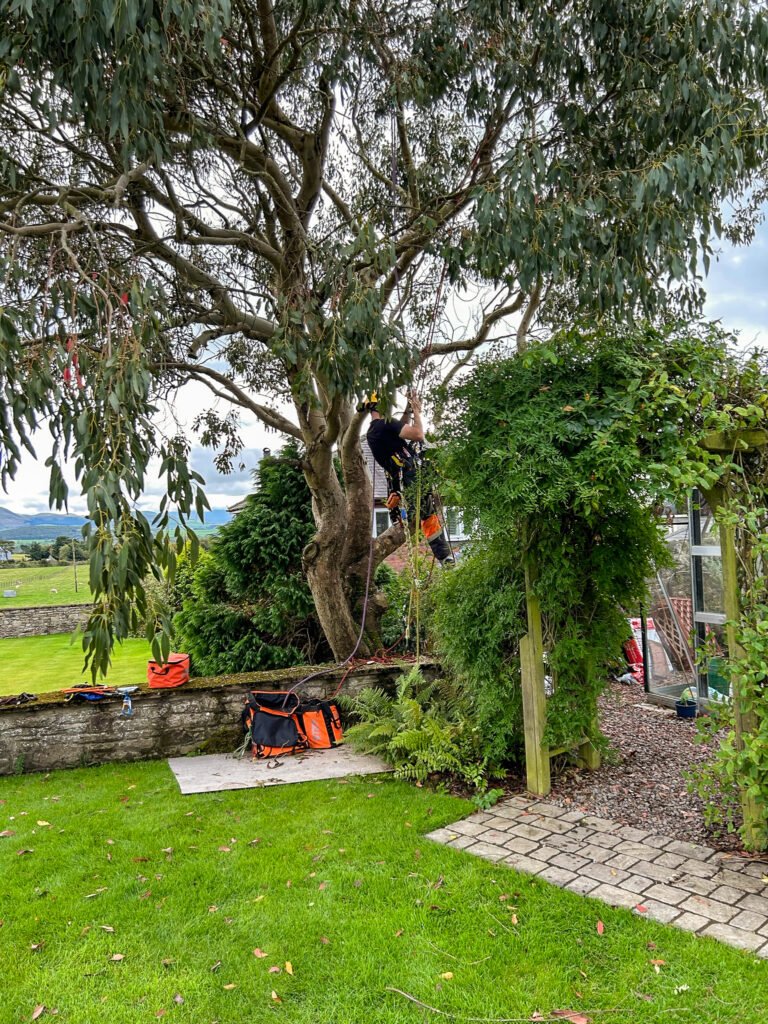
Key Pruning Techniques
1. Formative Pruning (For Young Eucalyptus)
This shapes the tree’s long-term structure.
- Maintain a single strong leader if you want a tall standard
- Remove crossing or competing stems
- Gradually raise the canopy if a clear trunk is desired
This is particularly important for E. globulus and E. dalrympleana, which can otherwise grow tall and leggy.
2. Pollarding
Pollarding keeps Eucalyptus compact and produces masses of juvenile foliage.
- Choose a pollard height (often 1–2m)
- Cut all stems back to that framework each year or every second year
- Allow vigorous new shoots to grow through spring and summer
Most Eucalyptus respond well, but E. gunnii and E. dalrympleana are especially suited to this method.
3. Coppicing
Coppicing cuts the tree back to ground level.
Best for:
- A bushy foliage shrub
- Floral arrangements
- Controlling size in small gardens
- Rejuvenating older trees
Coppicing works beautifully for E. gunnii and E. dalrympleana.
E. globulus will coppice too, but tends to be more forcefully vigorous.
4. Light Maintenance Pruning
If you prefer to keep the tree as a small-to-medium specimen:
- Thin overcrowded branches
- Remove dead or damaged limbs
- Reduce height lightly
- Trim straggly or wind-damaged shoots
This method is often best for E. dalrympleana, which has a more upright, elegant habit.
Pruning Eucalyptus – species specific
Eucalyptus gunnii (Cider Gum)
One of the most popular species in the UK.
- Responds exceptionally well to annual pollarding
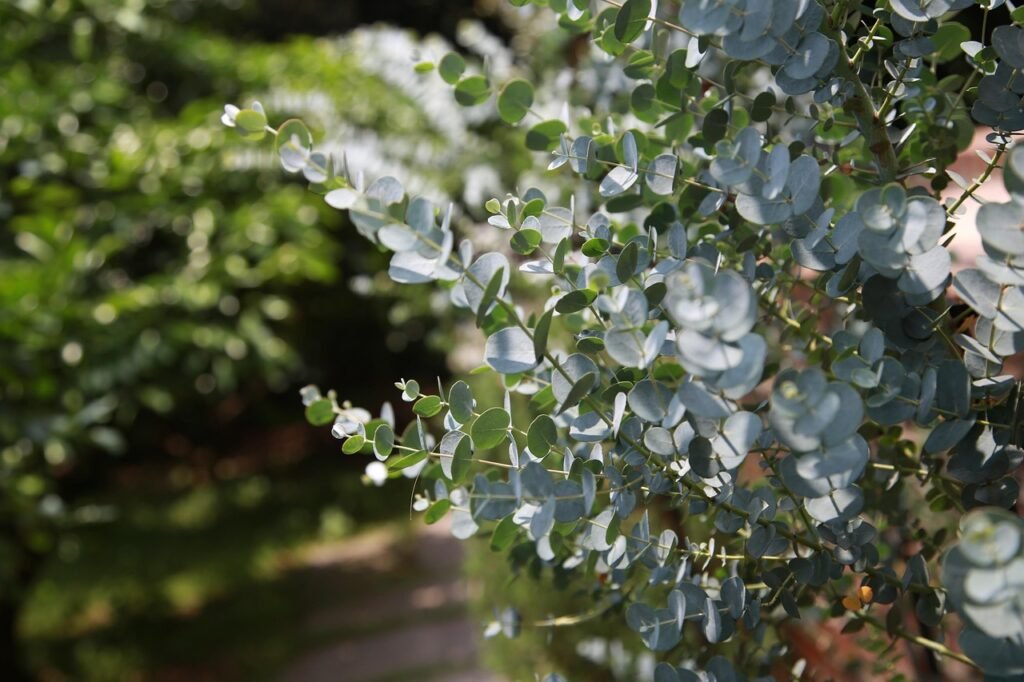
- Produces abundant silvery juvenile foliage, ideal for flower arranging
- Can reach 25–30m if unpruned, so regular cutting helps keep it garden-friendly
- Very cold tolerant
Best pruning methods:
- Pollard annually or biennially
- Coppice for a dense shrub of decorative foliage
Eucalyptus globulus (Blue Gum)
Bold, architectural, and very fast growing.
- Can reach huge sizes (40m+ in ideal conditions)
- Less hardy than gunnii or dalrympleana—avoid pruning during hard frost
- Juvenile foliage is stunning but transitions to long, scythe-like adult leaves
- Benefits from strict formative pruning when young
Best pruning methods:
- Formative pruning for structural strength
- Light annual reductions for height and spread management
- Pollarding possible but best started early
Eucalyptus dalrympleana (Mountain Gum)
An increasingly planted UK species thanks to its elegance and cold tolerance.
- More cold-hardy than globulus, similar hardiness to gunnii
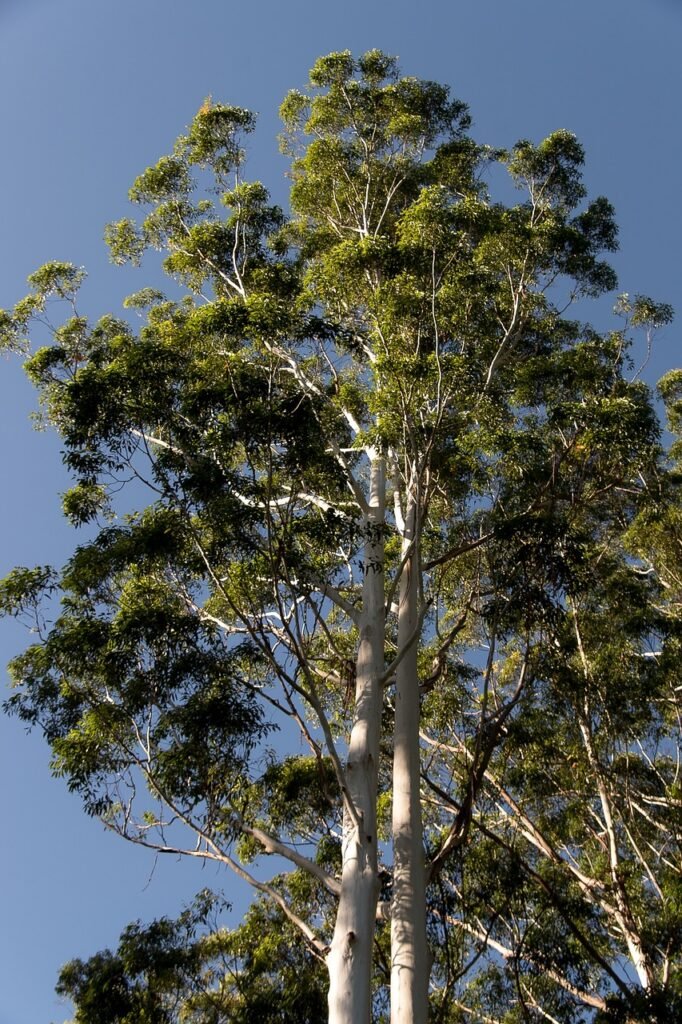
- Naturally develops a tall, straight trunk with beautiful white bark
- Juvenile leaves are blue-green and rounded; adult leaves long and sickle-shaped
- Responds very well to both pollarding and coppicing
Dalrympleana can become very tall (30m+) if left unpruned, so management is key in domestic gardens.
Best pruning methods:
- Pollarding to 1–2m every 1–3 years for manageable size
- Coppicing for dense, decorative foliage
- Maintenance pruning to prevent wind damage in exposed sites
- Formative pruning to ensure a straight, stable leader if grown as a tree
General Tips for All Eucalyptus
- Use sharp, disinfected tools
- Make clean cuts just above a bud or junction
- Angle cuts to shed water
- Don’t remove more than a third of the canopy in one go (unless pollarding/coppicing)
- Water during dry periods following hard pruning, especially in spring
- Mulch around the base to conserve moisture, but keep mulch away from the trunk
Final Thoughts
With the right approach to pruning eucalyptus, they can thrive beautifully in the UK. Their rapid growth makes them forgiving and adaptable, and pruning allows you to tailor their size and shape to your garden.
Whether you want:
- A compact shrub full of silvery leaves
- A neatly shaped small tree
- A bold architectural specimen
…your pruning choices will determine the final look.
Handled correctly, these impressive trees can remain both manageable and stunning for decades